
Medical Device Manufacturing
Get your product into production with room to evolve
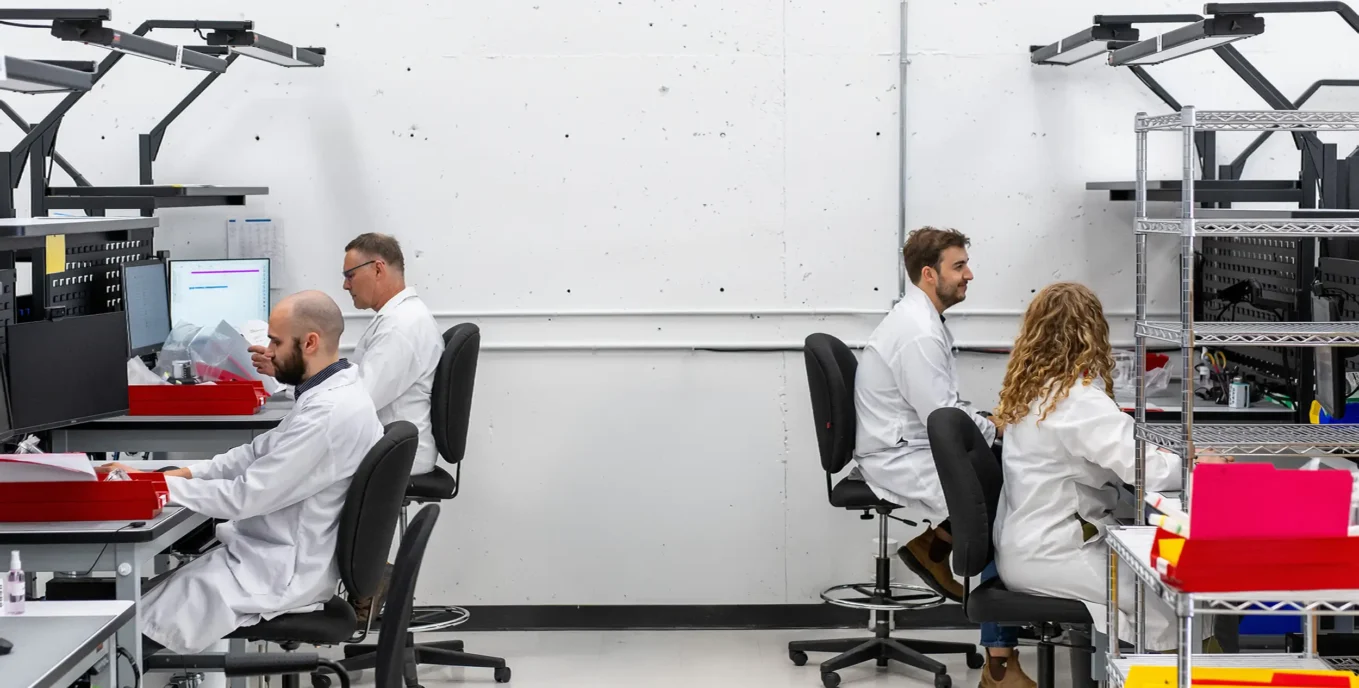
Getting a medical device into production means turning a working product into something you can build reliably, repeatedly and at the level of control your program requires. You may come to StarFish for medical device manufacturing with a settled design and clear production requirements, or with important decisions around software, architecture, suppliers, cost or future functionality still developing, but whatever your starting point, you need enough process definition, evidence, supplier readiness, cost confidence and production capability to support what comes next without forcing every part of the manufacturing system further than the program requires.
StarFish provides medical device manufacturing services that establish the processes, suppliers, documentation, quality controls, testing and production planning required for reliable manufacturing while keeping engineering close enough to respond as product, supplier, cost or process decisions develop.
The result is controlled manufacturing that supports the device you need to build today, the commercial requirements around it, and a practical path for later product change.
Medical device manufacturing at a glance
- Manufacturing readiness matched to what your program needs next, from controlled clinical builds through design transfer and NPI to scale-up and commercial production
- DFM/DFA, manufacturing engineering, process development, supplier qualification, validation and production planning
- Engineering, manufacturing, quality and supply-chain knowledge kept connected as the product moves into production
- Manufacturing support that can continue within StarFish or prepare the product for transfer into another manufacturing environment
- Production learning used to improve process performance and, where appropriate, inform product decisions
Product and manufacturing decisions belong together
Product and manufacturing decisions keep influencing one another as your device moves toward production. Design choices shape how reliably the product can be built, manufacturing decisions can affect what the product is able to support later, and repeated production can reveal issues or opportunities that were not visible in development.
Design decisions shape manufacturing performance
How your product is designed and specified shapes how reliably it can be manufactured because choices around architecture, components, assembly, testing and process controls all influence production performance. Bringing manufacturing input into those decisions while they can still change gives you more opportunity to improve both the product and the way it will be built.
If you bring us a device that is already designed or still in development, our teams first understand the design intent and the decisions that shaped it before determining what manufacturing needs to change. Understanding those decisions helps identify where production needs greater definition, where targeted product changes would improve manufacturability, and where an existing choice should remain intact.
As those decisions become more concrete, the relationship starts to work in the other direction as well. Changes made to solve an immediate production problem can affect what your product is able to support later, so design, architecture and production requirements need to be considered together when those choices are made.
Production creates new product knowledge
Once you begin building repeatedly, production adds another layer of information. Variation, supplier behaviour, operator interaction, testing performance and yield can reveal things prototypes can’t. That learning can point to improvements in the process or the product itself while engineering still has the opportunity to act on it.
Taken together, those interactions are why manufacturing works best when product knowledge, engineering judgment and production learning stay connected. The balance changes as your product advances, which is why the right manufacturing support looks different at clinical build, transfer and commercial scale.
Medical device manufacturing services for different stages of production
That progression creates three distinct manufacturing needs: controlled production for a clinical milestone, turning a working design into a production-ready manufacturing system, or strengthening production as volume and commercial demands grow.

Build controlled devices for clinical milestones while your product and manufacturing approach continue developing.

Turn a working or inherited design into a production-ready manufacturing system through NPI, DFM/DFA, process development, supplier qualification, validation, cost modelling and pilot production.

Increase output while strengthening process capability, yield, supply continuity, capacity, economics and production performance.
Manufacturing depth where your program needs it
Moving a medical device into production can require engineering, manufacturing, quality and supply-chain expertise to work together as different problems emerge. StarFish brings that depth to the manufacturing work your program needs, from DFM/DFA and process development through supplier qualification, validation, scale-up and ongoing commercial production.
Experience solving demanding technical programs sharpens the judgment our teams bring to manufacturing work at every level of complexity. Programs where the path to production is not obvious require our teams to understand the product, connect engineering and manufacturing decisions, and determine what needs to be resolved before production can move forward.
More focused manufacturing programs benefit from that same depth without carrying capabilities or scope they do not need.
Frequently asked questions
What types of medical devices does StarFish manufacture?
StarFish manufactures complex medical devices across sectors including diagnostics, drug delivery, surgical systems, therapeutic devices, wearables and connected medical products. Manufacturing support can begin with controlled clinical or pre-commercial builds and continue through NPI, scale-up and ongoing commercial production.
Can StarFish handle both clinical builds and commercial production?
Yes. StarFish supports clinical and pre-commercial manufacturing, design transfer and NPI, process development, scale-up and ongoing commercial production. The level of process definition, validation, supply readiness and capacity is matched to what the program needs next.
Do you provide medical device manufacturing in the US and Canada?
StarFish supports medical device development and manufacturing through a North American network that connects engineering, NPI, pilot production and commercial manufacturing capabilities across the product lifecycle.
What does NPI involve at StarFish?
New Product Introduction connects product intent to repeatable production. At StarFish, NPI can include DFM/DFA, manufacturing engineering, process development, tooling and fixtures, supplier qualification, pilot builds, process validation, should-cost modelling, manufacturing documentation, yield improvement and production planning.
What happens when my product needs an engineering change after production begins?
Engineering remains connected to manufacturing so changes involving components, suppliers, software, testing, cost, yield or future product functionality can be evaluated against the product architecture and production system already in place. Controlled change management protects production quality and repeatability while the product continues to evolve.
Can StarFish transfer my device to another contract manufacturer?
Yes. StarFish can manufacture within its own network or prepare and support transfer into another contract manufacturing environment when that fits the client’s production strategy. Design intent, manufacturing requirements, documentation and production knowledge remain connected through the transfer.
LumiThera: From Prototype to Commercial Medical Device
Explore Our Other Services

Our multidisciplinary teams have all the in-house capabilities to transform your medical device from concept to final product.

Navigate complex regulatory landscapes with our integrated approach to quality and regulatory services.
Explore Our Sectors

We help you create innovative devices that combine your drug with optimal delivery methods for the most effective treatment.

From remote diagnostics to powerful imaging systems, we design and develop solutions that work inside or outside a traditional healthcare setting.

From supporting respiratory care to enabling home-based therapies, we have developed hundreds of therapy devices that treat patients inside or outside the clinic.

Designing and developing surgical devices and instruments that redefine procedures in the operating room.
Related Resources

The hourly rate is only a starting point when you choose a medical device engineering firm. Learn how to judge team staffing, in-house disciplines, facilities, ISO 13485 scope, and track record before you sign.

Medtech leaders expect connected products to take over their portfolios within five years. Three years of actual FDA clearance filings show a real climb, just a much more gradual one.

Learn why supply chain, process, cost, and quality gaps stall cleared devices, and why they are decided during design.

From skipping the doers to estimating toward a target budget, these ten project estimation pitfalls explain why good estimates go wrong and what to do instead.