

Understanding Endoscope Reprocessing
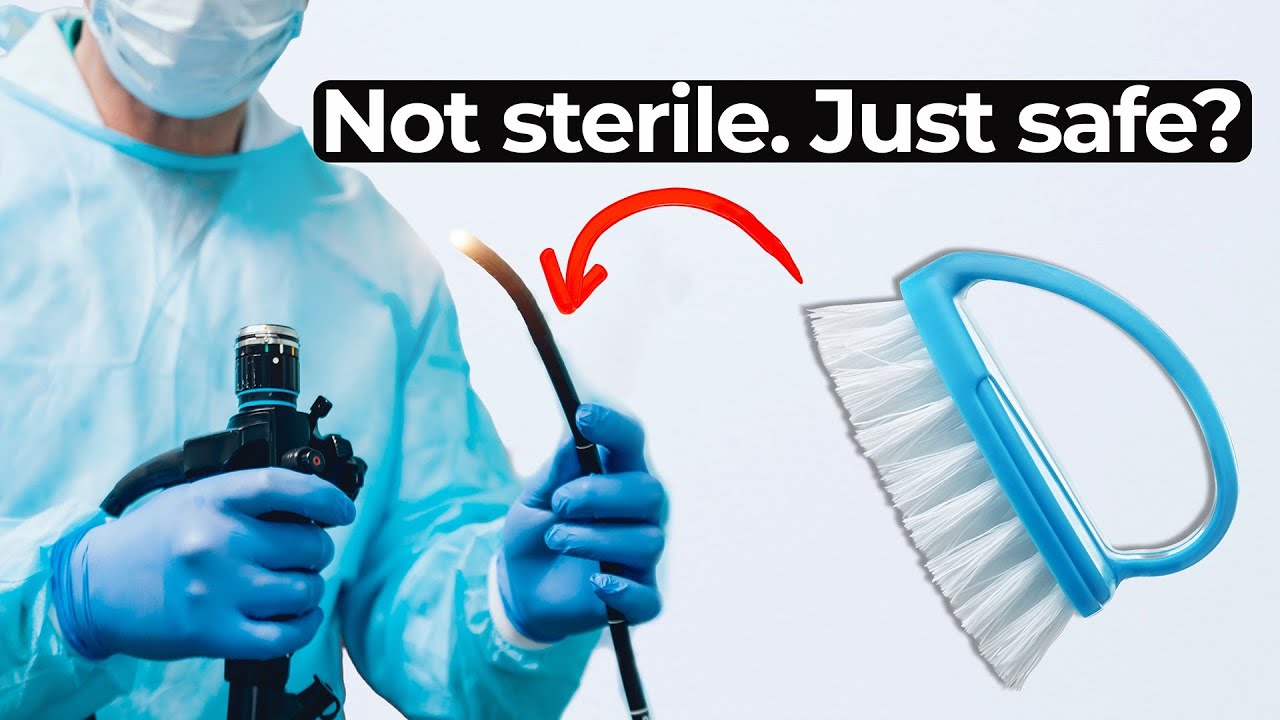
In this episode of MedDevice by Design, Ariana and Mark examine the complexities of endoscope reprocessing, one of the most difficult tasks in medical device hygiene. These devices contain intricate internal channels and delicate mechanisms that make both cleaning and disinfection incredibly labor-intensive. With endoscopes routinely used in clinical settings, ensuring they are safe to reuse is critical for patient safety and operator health.
Why Endoscopes Are So Hard to Clean
Mark explains that endoscopes are inserted into particularly contaminated environments and are often constructed from materials that cannot withstand high temperatures. This makes steam sterilization ineffective. Instead, hospitals rely on high-level disinfection—an extensive manual and automated cleaning process that includes enzymatic scrubbing, flushing internal ports, leak testing, and finally, drying and hanging.
Innovations in Endoscope Cleaning
To streamline this complex process, manufacturers have developed new automated solutions. The Steris Inspire 300, for instance, eliminates the need for manual cleaning between bedside wipe-down and automated disinfection. Other innovations include the Pentax Aqua Typhoon and Nanosonics Coris, which use entrapped bubbles or pulsatile flow to clean hard-to-reach channels. These advances aim to reduce the physical burden on staff while improving the reliability of endoscope reprocessing outcomes.
Is It Really Safe?
While current reprocessing methods report an adverse event rate of just 1 in 1.8 million, the challenge lies in consistent execution. Missed steps and usability challenges can introduce risk, despite the devices being considered technically safe. That’s why innovations in automated systems are so important—they minimize human error and optimize hygiene.
Explore more in this in-depth episode on one of the most underappreciated challenges in medtech cleaning protocols.
Correction: In this episode, we mistakenly refer to the Steris Inspire 3000 as the “Steris Inspire 300.” The correct name is Steris Inspire 3000. We apologize for the oversight.
Enjoying MedDevice by Design? Sign up to get new episodes sent to your inbox.
Related Resources
When one team designs, lays out, and brings up a board, knowledge sticks. Splitting that work across specialists looks efficient but creates the risk it’s meant to avoid.
AI coding agents like Claude and Codex are helping EE teams turn concepts into tested hardware in weeks, not months, without adding a new vendor or software dependency.
Choosing an EE partner is a program risk decision, not a staffing decision. Early architecture choices carry through to certification, and the wrong partner can cost far more than their hourly rate suggests.
PCB stack-up shapes signal integrity, EMC performance, and manufacturability long before layout begins. Getting layers and reference planes right avoids costly redesigns later.