
Medical Device Design Transfer & Manufacturing Readiness
From working device to production-ready manufacturing system
A working device still needs to become something production can build reliably, repeatedly and at the economics your program requires. That transition often happens while parts of the product, manufacturing process, supply chain, documentation, validation or cost model are still developing, so preparing the device for production means bringing those elements together around what the next stage actually requires.
New Product Introduction provides that connection by establishing what production needs now, what can continue to develop, and where product or manufacturing decisions need to preserve room for later change without losing the intent behind your design.
Readiness depends on what the program needs next
What manufacturing readiness looks like depends on what the program needs to support next. Some programs need credible manufacturability, cost, supply and production evidence before full commercial capacity is required. Others need stronger validation, process capability, supply resilience, yield performance or capacity because launch or scale is closer. StarFish develops the production system around the requirements that matter to the next milestone while keeping consequential downstream needs in view.
StarFish can take on that transition whether your device was developed by your organization, another design partner or by us. We build the production system around the product as it actually exists, with qualified inputs, repeatable processes, controlled records and economics grounded in how your device will be manufactured.
Understand the design before changing it
Moving a product into manufacturing often creates pressure to simplify, substitute, redesign or standardize, but those changes only help when they preserve the requirements and design intent the product still depends on.
Understanding the decisions behind your device gives production a stronger basis for knowing what actually needs to change. Product architecture, critical requirements, component choices, assembly approach, test strategy and existing records help distinguish decisions that need to be preserved from choices that are creating unnecessary production difficulty.
Change only what improves the production outcome
Our manufacturing and engineering teams use that design context to determine where changes will improve repeatability, cost, supply or process performance without compromising what the product still depends on.
That understanding becomes the foundation for NPI, where product knowledge is translated into the processes, suppliers, controls and production methods required to build the device repeatedly.
NPI turns product intent into repeatable production
At StarFish, New Product Introduction connects development knowledge to the work production has to perform every day, allowing your device to move toward production without requiring every manufacturing question to be resolved in advance. NPI develops the product, process, supply, cost and control elements that production depends on while engineering remains available to address product questions exposed by that work.
Preparing your product for repeatable production requires coordinated work across three areas, each addressing a different part of the readiness problem.
Product and process
Production has to turn design intent into a manufacturing method that can build your device consistently and expose where product or process changes would improve the result. Our engineering and manufacturing teams turn that intent into a repeatable production method while identifying where changes can improve the outcome.
Establishing that production method can require:
- design for manufacturing and assembly
- manufacturing engineering and process development
- tooling and fixture development
- production test development
- pilot and repeated builds
- process validation
- yield analysis and process improvement
Cost and supply
A production model that works technically also has to support the economics and supply requirements around the product. Supplier capability, component availability, production volume and cost assumptions determine whether the manufacturing model can support the product at the quality, scale and economics your business expects.
Our teams use should-cost modelling, supplier qualification and production planning to test those assumptions and strengthen the manufacturing model around what the product actually needs.
Building credible cost and supply readiness can require:
- should-cost modelling
- cost improvement
- supplier selection and qualification
- supply-chain development
- component availability assessment
- production-volume and capacity assumptions
Production control and learning
Reliable production depends on controls that make the process repeatable while also generating information that can improve the product and manufacturing approach. Our manufacturing and quality teams build those controls while creating the data engineering needs to identify where the product or process still needs attention.
Building that control and feedback loop requires several kinds of production work that make the process repeatable while creating information the team can use to improve it:
- manufacturing documentation and quality controls
- process validation
- production testing
- traceability
- yield analysis
- process improvement
- controlled pilot production
Together, these activities give production the definition it needs to move forward while preserving room to improve parts of your product or manufacturing approach as better information becomes available. As the production system takes shape, the economics, supply chain and manufacturing record become more concrete, giving you a stronger basis for the cost, supplier and process decisions that follow.
A credible cost structure comes from production reality
Prototype cost can give you a misleading picture of commercial economics because the real cost drivers only become visible once the production process, supply chain and expected volumes are understood. Relying on prototype economics too long can distort pricing, margin expectations and investment decisions just as your program is preparing to advance.
Commercial cost becomes clearer as component pricing, supplier terms, assembly time, yield, scrap, tooling, testing, cycle time, process complexity and production volume come into view. StarFish combines should-cost modelling with manufacturing engineering to show where commercial cost is actually coming from and where changes can improve the economics without compromising your product.
The resulting production cost model can support decisions about pricing, margin, investment and future volume before the program commits to capacity it may not yet need.
Shape the supply chain around the product you intend to produce
A supply chain that works for prototypes may not support routine production at the required quality, cost, volume or lead time, particularly when parts were selected for development convenience rather than long-term availability or supplier capability.
Our supply-chain and engineering teams evaluate supplier capability, component availability, qualification requirements and production risk against the product you actually intend to manufacture. That helps identify where the existing supply base is ready to support production and where qualification, sourcing or component changes are needed before your program advances.
The level of supplier readiness should support what the program needs next while accounting for components, lead times or dependencies that could materially constrain later production. That lets the supply strategy mature with the product rather than forcing full commercial infrastructure before it is required.
Build the manufacturing record alongside the process
Production documentation needs to reflect the way your device is actually built, tested and controlled. Our manufacturing and quality teams develop the controlled record alongside the process so documentation reflects what production actually does, not a version of the process captured after the fact.
Work instructions, assembly procedures, inspection criteria, test methods, process specifications, traceability requirements and validation records all contribute to that manufacturing record. Each pilot build, validation activity and process change can strengthen it while the process itself is still developing.
That creates a stronger basis for training, quality control, regulatory support, future process changes and routine production, while preserving the history behind why the process was established the way it was. The same builds that create that record also reveal things about the product and process that development prototypes often can’t, which makes production itself another source of engineering information.
Manufacturing reveals what prototypes can’t
Repeated builds expose variation and production constraints that one-off prototypes rarely reproduce, giving you a clearer view of where the product or manufacturing process may still need to change. Component variation, operator interaction, fixture limitations, process sensitivity, supplier performance, test repeatability, assembly sequence, yield patterns and cycle-time constraints all become easier to evaluate when the same device moves through a defined process repeatedly.
Our teams use that production learning to separate product problems from process, supplier or test problems before deciding what should change. Those findings may call for a process change, a supplier change or a targeted product change, and NPI creates the opportunity to act while engineering knowledge remains close enough to the manufacturing work to influence the result.
What production learns therefore needs a route back into the product, just as design intent and development knowledge need a route into manufacturing.
Manufacturing NPI carries the product from transfer into production
Manufacturing design transfer at StarFish focuses on executing the production system around the device. That includes DFM/DFA, manufacturing process development, tooling and fixtures, supplier qualification, pilot builds, process validation, should-cost modelling, yield improvement and the production controls required for repeatable manufacturing.
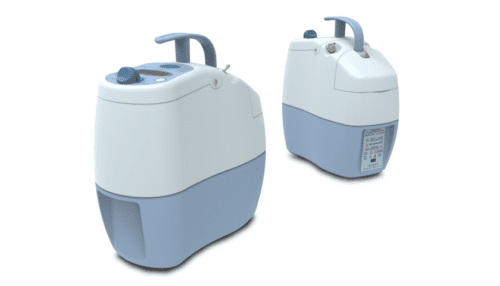
Inogen Oxygen Concentrator
Explore Our Other Services

Our multidisciplinary teams have all the in-house capabilities to transform your medical device from concept to final product.

Navigate complex regulatory landscapes with our integrated approach to quality and regulatory services.
Explore Our Sectors

We help you create innovative devices that combine your drug with optimal delivery methods for the most effective treatment.

From remote diagnostics to powerful imaging systems, we design and develop solutions that work inside or outside a traditional healthcare setting.

From supporting respiratory care to enabling home-based therapies, we have developed hundreds of therapy devices that treat patients inside or outside the clinic.

Designing and developing surgical devices and instruments that redefine procedures in the operating room.
Related Resources

The hourly rate is only a starting point when you choose a medical device engineering firm. Learn how to judge team staffing, in-house disciplines, facilities, ISO 13485 scope, and track record before you sign.

Medtech leaders expect connected products to take over their portfolios within five years. Three years of actual FDA clearance filings show a real climb, just a much more gradual one.

Learn why supply chain, process, cost, and quality gaps stall cleared devices, and why they are decided during design.

From skipping the doers to estimating toward a target budget, these ten project estimation pitfalls explain why good estimates go wrong and what to do instead.