

Managing Requirements in MedTech: Why Conversation Drives Better Outcomes
TL;DR
- Requirements work best when treated as active conversations rather than static documents.
- Cross-functional clarity reduces rework, sharpens verification, and builds shared understanding.
- Documenting decisions, not every discussion, creates disciplined and defensible design history.
- A conversational approach supports faster onboarding and stronger team-level trade-offs.
- The most effective requirements are not only verified but genuinely understood.
Common Misconceptions About Requirements in MedTech
In the world of medical device development, requirements are often treated as a regulatory tax, essentially documentation created solely to satisfy a compliance need. But at StarFish Medical, we look at things differently. Requirements are the dialogue that holds together a multidisciplinary development team, conveying a shared understanding that helps drive better and faster decision making. If they hang around in the background, they are inert. If they spark discussion, they are active and valuable.
When framed this way, we turn the bureaucracy into strategic leverage and transform the way our teams design, verify, and deliver.
So, who are requirements really for? And why should MedTech leaders care about how they’re written?
How Requirements Conversations Support Cross-Functional Teams
If requirements are conversations, who’s listening?
In a typical medical device development program, requirements are consumed by a diverse set of stakeholders, each with a different perspective and need:
- Designers and Developers want to understand overall intent, needing clarity about constraints, interfaces, and trade-offs.
- Test Engineers rely on precision, requiring unambiguous criteria and well-defined parameters and conditions.
- Manufacturing Engineers look for tolerances and features that matter to product performance, manufacturability, and regulatory compliance, leaning on design requirements to define what needs to be controlled in production.
- QA/RA Teams aim to ensure readiness for audits and submissions, shaping content to align with the regulatory strategy and internal quality processes.
- Regulators focus on safety, effectiveness, and traceability, expecting documented evidence that the device has been developed in accordance with its intended use and relevant standards.
- Clients and Business Teams care about product cost, branding, and market fit, looking for alignment between technical development and business goals.
Too often, requirements are written from a single, technically focused voice and assumed to be clear for all audiences. But each group views requirements through a different lens, so the key is anticipating how each reader will interpret them. It’s not just writing; it’s translation.
Collaborative Practices for Clearer Requirements Conversations
So, then what do effective requirements look like? How can we tailor the message to make them work for everyone?
Here are some key practices we’ve developed for building a communication-first requirements culture:
| Practice | Purpose (“The Conversational Lens”) |
| Provide sources and rationale | Help readers understand where requirements come from and why they exist, considering trade-offs and domain context. |
| Hold cross-functional reviews (early and often) | Avoid silos by inviting design, test, regulatory, and operational stakeholders to challenge assumptions and align expectations. |
| Use informational fields alongside requirement statements for specific audiences | Cater to the needs of downstream teams, supplementing design input requirements with implementation notes, test conditions or methods, manufacturing considerations, etc. Facilitate cross-functional reviews by pre-empting questions stemming from different areas of interest. |
| Maintain a change narrative | Allow team members to adjust in real time as our understanding of clinical, business, and technical requirements evolve. Let them know what’s changing, why, and with what impact to their activities (past, present, and future). |
| Reflect relative priorities | Manage focus for the entire team, clarifying what is a “must have”, “nice to have”, or otherwise something to be tabled for the future. Give them some trade space and a lever to pull for scalable rigor. |
Ultimately, these practices aren’t red tape, they’re dialogue structures that make requirements useful, alive, and relevant.
How You Benefit and How to Manage Challenges
Embedding these habits into your workflow can unlock real value, but they also raise practical questions about scope and effort.
As with any process, questions of “how much…?” can be expected:
- How much do we need to document?
- How much do we need to formally verify and validate?
- How much do we need to control over time?
But through experience, we’ve learned that a conversational approach to requirements engineering helps turn individual judgment calls into team-level trade-offs. The key is discipline. You don’t need to record every discussion, but you do need to document changes when decisions are made.
And the payoff? Some key benefits we see include:
- Shared mental model – Diverse teams have a common vision of the system and relative priorities.
- Reduced design churn/rework – Misunderstandings are caught early.
- Increased verification efficiency and focus – Rigor is scaled towards drivers for safety, effectiveness, and compliance.
- Better audit defensibility – Clear rationale and history throughout the design history file.
- Faster onboarding – New team members have greater context than they would with a set of unclear or overly technical specs.
- Knowledge management and team building – Continuous learning about how to work effectively within context of different projects, systems, and teams (clients included!).
Leadership Insights: Driving Success Through Requirements Conversations
For founders, executives, and innovators, the message is clear: if your teams treat requirements as documents instead of conversations, you’re leaving alignment and value on the table.
At StarFish, our systems engineering approach is built on the idea that every requirement is a communication tool. It connects disciplines, clarifies decisions, and reduces risk by improving understanding rather than adding process.
When you turn requirements into conversations, you don’t just meet regulations. You build devices — and teams — that work better together.
Key Questions to Improve Your Requirements Approach
For your next project, consider these questions:
- Who are your requirements really written for – and do they understand them?
- How often do your testers or manufacturing teams contribute to requirement reviews?
- Are your requirements documents telling a story, or just holding text?
In the end, the best requirements aren’t just verified, they’re understood. And in complex medical systems, understanding is the ultimate form of safety.
In your next program, let requirements become a shared language that aligns your team and accelerates development.
Astero StarFish is the attributed author of StarFish Medical team blogs. We value teamwork and collaborate on all of our medical device development projects.
Images: Adobe Stock
Related Resources
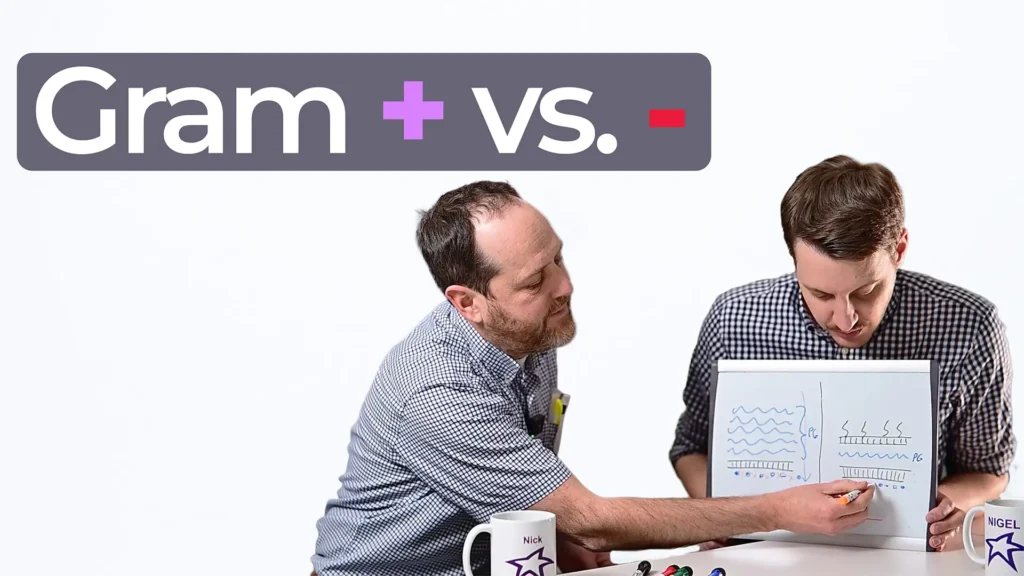
Understanding gram positive vs negative bacteria is essential when studying sterility, microbiology, and antibiotic effectiveness. While many people think the difference is only about staining, the reality is much deeper. In this Bio Break episode, Nick and Nigel walk through the structural differences between these bacteria and explain how those differences impact how they behave and how they are treated.

Nick and Nigel explore the science behind hand sanitizer formulations. They discuss how alcohol interacts with bacterial cells, why water improves its effectiveness, and what the additional ingredients in sanitizer actually do.

Scott Phillips, CEO of StarFish Medical, sits down with Peter van der Velden, Managing General Partner at Lumira Ventures, to explore the strategic thinking behind major MedTech transactions and investments.
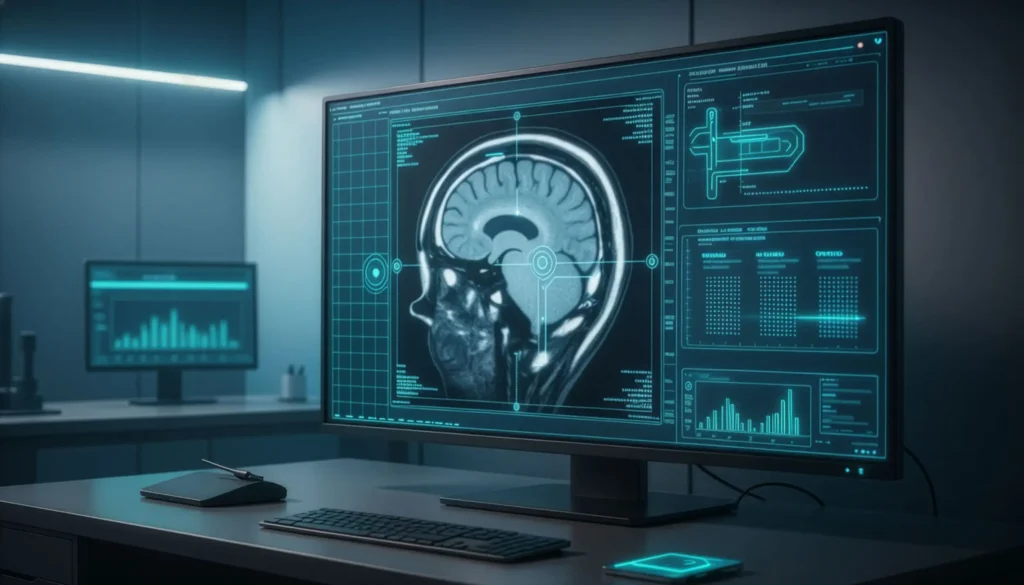
Computer vision technologies such as convolutional neural networks and vision transformers are transforming how AI analyzes medical images, each offering distinct advantages depending on the application and computing environment.