

Bacterial Endotoxin Testing Explained
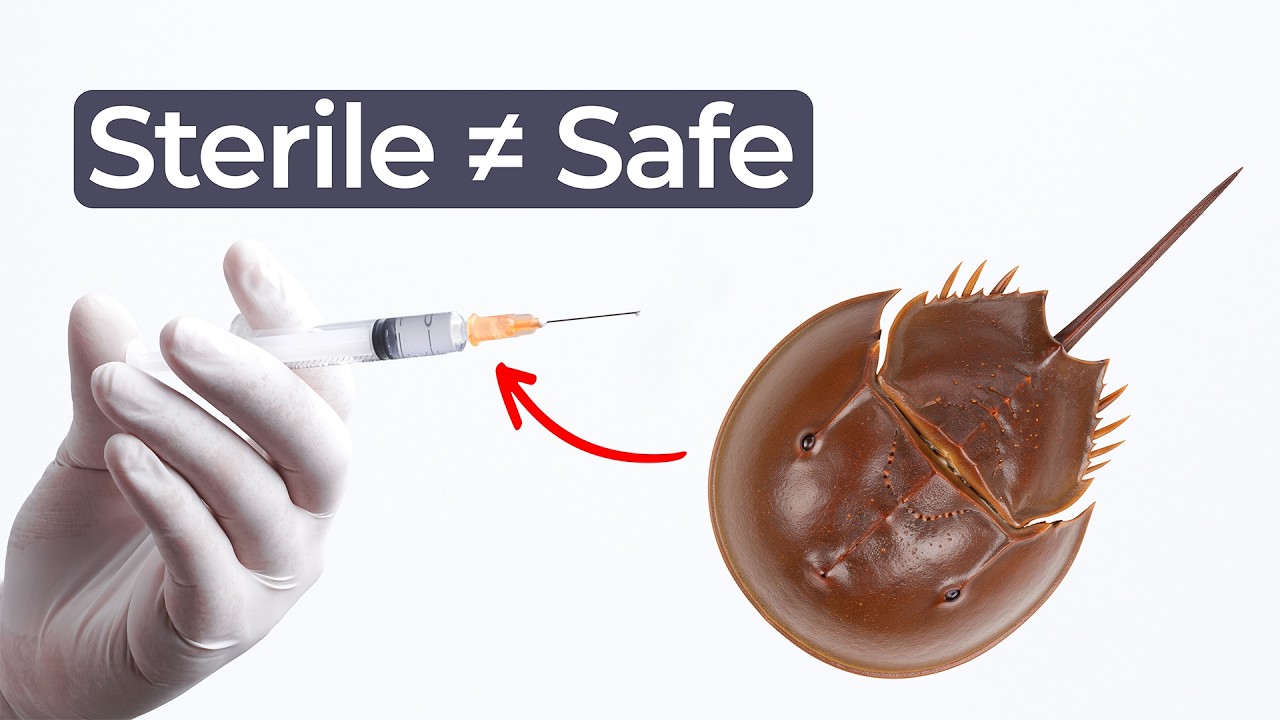
Bacterial endotoxin testing plays a critical role in medical device safety. In this Bio Break episode, Nick and Nigel take a surprising path from aliens and crabs to one of the most important quality checks in MedTech.
Although the conversation starts with speculation about what aliens might look like, it quickly turns to evolution, horseshoe crabs, and a remarkable property found in their blood. That property forms the foundation of the LAL test, which is widely used to detect endotoxins on medical devices.
From Horseshoe Crabs to the LAL Test
Horseshoe crabs have a unique immune response. When their blood encounters gram negative bacteria, it forms a precipitate that helps neutralize the threat. This reaction is incredibly sensitive.
Scientists harnessed this natural defense mechanism to develop the LAL test. By extracting horseshoe crab blood, laboratories can detect extremely small amounts of endotoxin contamination. As a result, the assay is now a standard method for endotoxin detection in medical devices.
The LAL test does not look for live bacteria. Instead, it detects lipopolysaccharide, which is part of the outer membrane of gram negative bacteria. You can think of it as the “skin” of the bacteria. Even after sterilization, that outer membrane may remain.
Why Bacterial Endotoxin Testing Matters for Medical Devices
Bacterial endotoxin testing is essential because endotoxins can trigger serious immune responses in patients. Our immune systems are primed to detect these molecules. When endotoxins enter the body, they can cause fever and other inflammatory reactions. These substances are known as pyrogens because they generate fever.
Importantly, sterilization alone does not eliminate endotoxins. Radiation may kill live bacteria on a syringe, for example, but the bacterial remnants can remain. Therefore, a device can be sterile yet still contain endotoxins.
That is why endotoxin detection is part of post-sterilization assessment. It verifies not only sterility, but also cleanliness and overall safety.
A Reminder of Biology’s Role in MedTech
This episode highlights how natural biology often informs medical technology. An ancient marine species provides the foundation for a modern safety test used across the industry.
It also reinforces a key lesson in MedTech development. Sterility is not the whole story. Leftover biological components can still create risk. Therefore, careful testing remains critical before a device reaches patients.
Enjoying Bio Break? Sign up to get new episodes sent to your inbox.
Related Resources

The hourly rate is only a starting point when you choose a medical device engineering firm. Learn how to judge team staffing, in-house disciplines, facilities, ISO 13485 scope, and track record before you sign.

Medtech leaders expect connected products to take over their portfolios within five years. Three years of actual FDA clearance filings show a real climb, just a much more gradual one.

Learn why supply chain, process, cost, and quality gaps stall cleared devices, and why they are decided during design.

From skipping the doers to estimating toward a target budget, these ten project estimation pitfalls explain why good estimates go wrong and what to do instead.
Explore Our Services

Our multidisciplinary teams have all the in-house capabilities to transform your medical device from concept to final product.

Medical device design and development with a commercial launch focus. See how we support clinical trials and facilitate seamless tech transfers.

We help you navigate complex regulatory landscapes to achieve commercial success. Explore our integrated approach to quality and regulatory services.