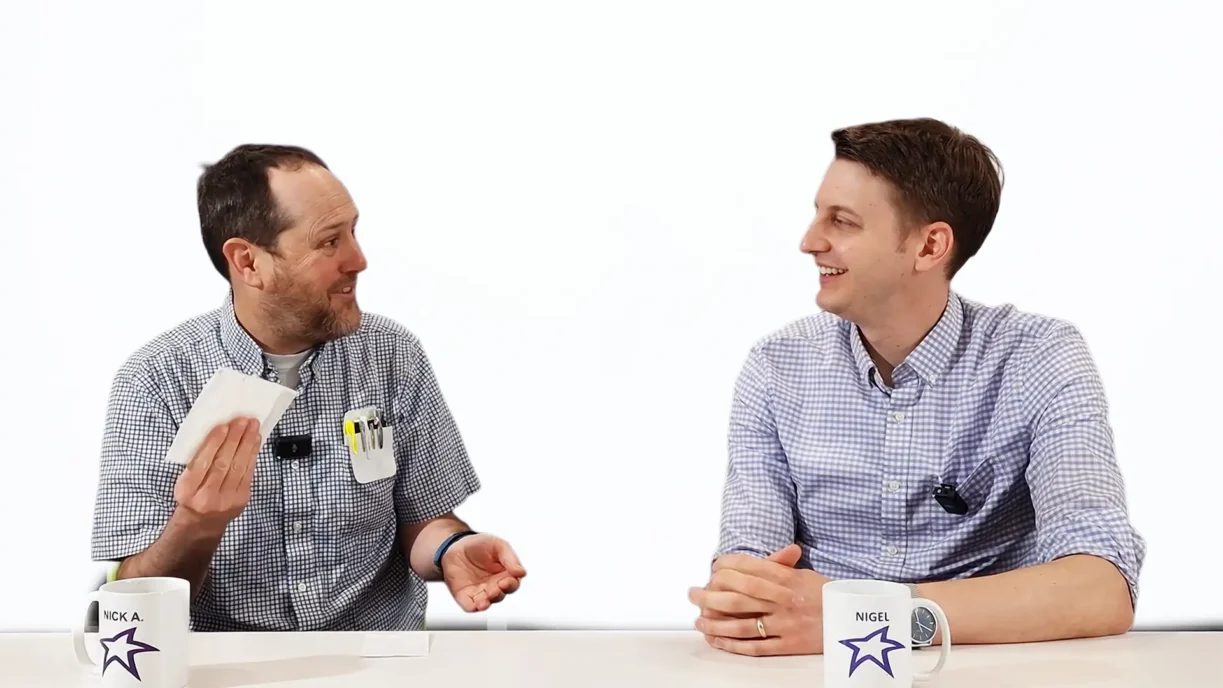
Two men, Nick A. (left) and Nigel (right), sit at a white table, engaging in a lively and friendly conversation. Both wear checkered shirts and lavalier microphones, suggesting a filmed discussion or interview. Nick holds tissue samples in one hand and gestures animatedly, while Nigel smiles in response. Each has a white mug labeled with their name and a purple star logo. The background is a bright white, creating a clean and professional studio setting.

Bio Break

Quick Insights into MedTech and Biotech Innovation

Welcome to Bio Break, a video series brought to you by StarFish Medical. Each episode delivers bite-sized, bio-focused insights on medical device product development and biotechnology in five minutes or less. Designed for busy innovators, Bio Break is your quick opportunity to learn something new, get inspired, and continue making an impact—all while taking a short pause in your day.

Watch our latest Bio Break episodes

YouTube video thumbnail

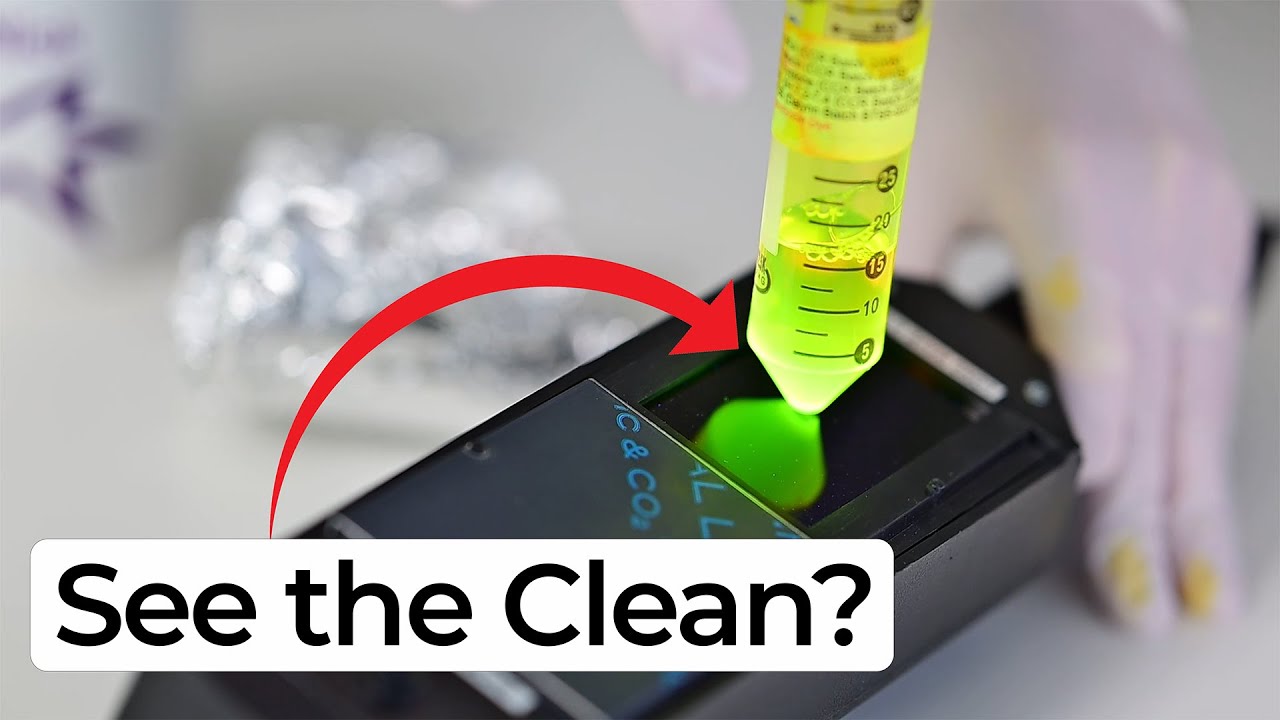
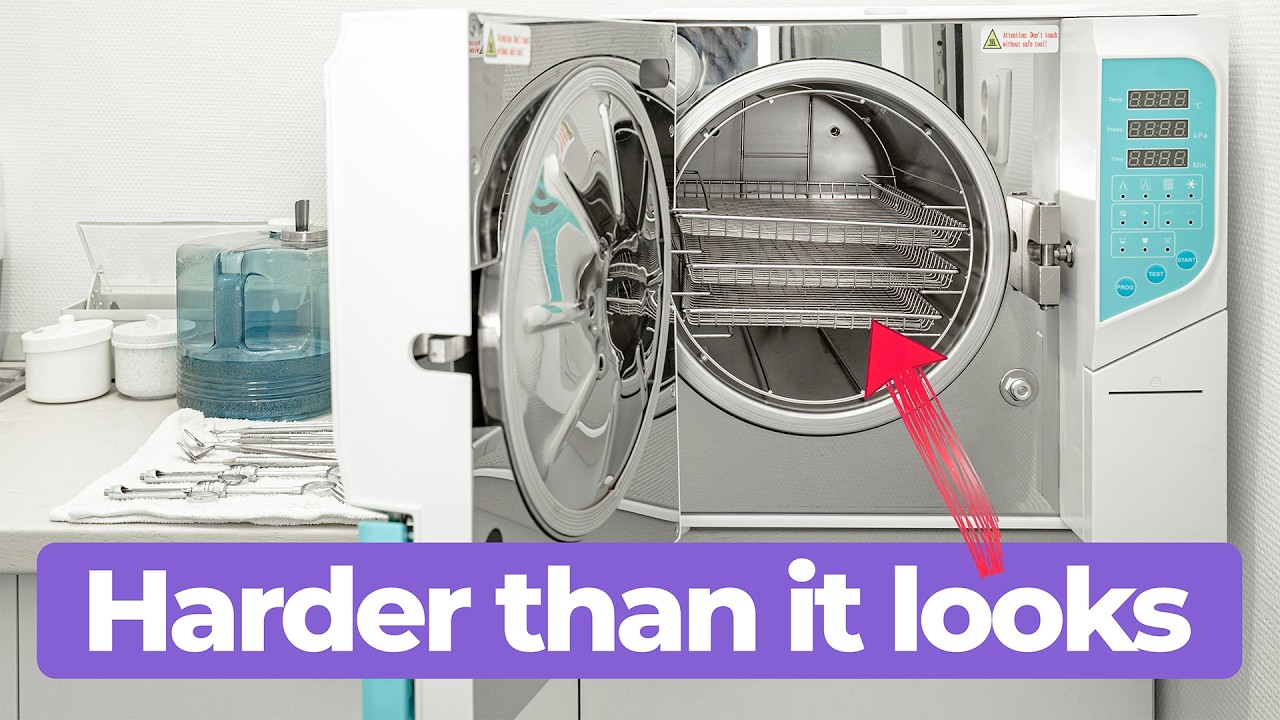
Fluorescent Soil Load Test

Nick Allan and Nigel Syrotuck explore a creative approach to visualizing cleaning validation using a fluorescent soil load.

Anaerobic Sample Collection Explained

Nick Allan joins Nigel Syrotuck to explore how anaerobic sample collection works and why it’s vital for studying bacteria that cannot survive in oxygen.

YouTube video thumbnail

Past Episodes

  • Close-up of gloved hands holding a medical catheter with the text "Minimally Invasive Maximum Impact" on the right side, representing advanced medical device technology.

    Nick Allan and Joris van der Heijden dive into one of the most impactful trends in modern medtech: minimally invasive surgery. Ablation technology plays a crucial role as hospitals and healthcare providers aim to reduce patient recovery times and overall system strain.

  • Close-up of gloved hands holding a flexible catheter used for minimally invasive procedures, with the caption "Minimally Invasive Maximum Impact" on a clean white background.

    In this episode of Bio Break, Nick and Joris dive into the rapidly growing field of minimally invasive medical technologies, focusing on…

  • A promotional graphic with bold text reading "Vision Surgery with a Tooth" in purple and black letters. Below the text is a large 3D image of a tooth and a purple plus sign. On the right side, a woman is undergoing an eye exam using a slit lamp microscope.

    In this episode of Bio Break, Nick and Joris dive into one of the most astonishing—and real—medical innovations we’ve ever come across: osteo-odonto-keratoprosthesis. Or, as Nick quickly dubs it, “tooth in eye surgery.”

  • Illustration of a house with a green checkmark beside a hospital with a red X. Text above reads "Prevent the Hospital?" in bold black and purple lettering, highlighting the concept of avoiding hospitalization through preventative healthcare.

    In this episode of Bio Break, Nick Allan and Joris van der Heijden explore a critical but often overlooked topic in healthcare innovation: prevention. While most conversations about medical devices revolve around treatment, the duo shifts the focus to technologies that help people avoid hospitalization altogether. Preventive medical devices and diagnostic tools are quietly transforming healthcare by catching diseases earlier and reducing the need for invasive procedures.

  • A laboratory scene featuring a glass Erlenmeyer flask filled with bright green liquid placed on a table against a dark background. Bold text on the left reads, “He drank Bacteria!?” in large gray and purple letters, adding a sense of curiosity and intrigue.

    In this episode of Bio Break, Nick shares one of his favorite discoveries in the world of infectious disease research — the groundbreaking discovery of Helicobacter pylori and its role in causing peptic ulcers. This fascinating story showcases how persistence, scientific curiosity, and innovative thinking can lead to discoveries that reshape medical science.

  • A futuristic smartwatch displaying biometric data on its screen, set against a glowing blue background with abstract graphs. Bold text reads "Where's my Cortisol-Sensing Watch?" in a mix of grey, purple, and black fonts.

    Nick and Joris tackle a question many tech and health enthusiasts have wondered for years: Where is my cortisol-sensing smartwatch? Nick shares a nostalgic story of reading about futuristic wearable technology in Popular Mechanics as a child — devices that would one day monitor biomarkers like cortisol to track stress and overall health. Now, decades later, he and Joris break down why such a wearable device still hasn't become a reality.

  • A close-up of a lateral flow test with a dropper releasing a liquid sample into the test well. The background features a blurred whiteboard with scientific diagrams. Bold text on the image reads "Big Pivot: From LDT to Lateral Flow," emphasizing the transition from lab-developed tests (LDT) to rapid lateral flow diagnostics.

    In the world of medical device development, unexpected challenges often lead to critical product pivots. In this episode of Bio Break, Nick and Joris discuss one of the most dramatic pivots they've encountered—transforming a lab-developed test (LDT) into a lateral flow assay to expand its market reach.

  • Two men sit at a table in a discussion, with one holding a frozen soda can. The background features a whiteboard with faint writing, and snowflake graphics are scattered around the image. The text overlay reads, "The Science of Freezing Cells" in bold black and purple letters.

    Cryopreservation is essential in biological research, regenerative medicine, and stem cell therapies. But freezing biological materials isn’t as simple as placing them in a freezer. Nick and Joris dive into this fascinating process in this episode of Bio Break, using a real-world example—Nick’s frozen beverage can, which burst due to water expansion.

  • Two men sit at a table discussing glucose monitors, with the text "How Glucose Monitors Really Work" overlaid on the image. One man gestures while speaking, and both have coffee mugs labeled with their names. The background features a whiteboard with blurred writing.

    Continuous glucose monitors (CGMs) are revolutionizing how people track blood sugar levels in real time. But how do they work, and where exactly do they measure glucose? Nick and Joris explore the science behind CGMs, explaining the difference between blood glucose monitoring and interstitial fluid measurement.