

Why 70% Alcohol Sanitizer Works Better Than 100%
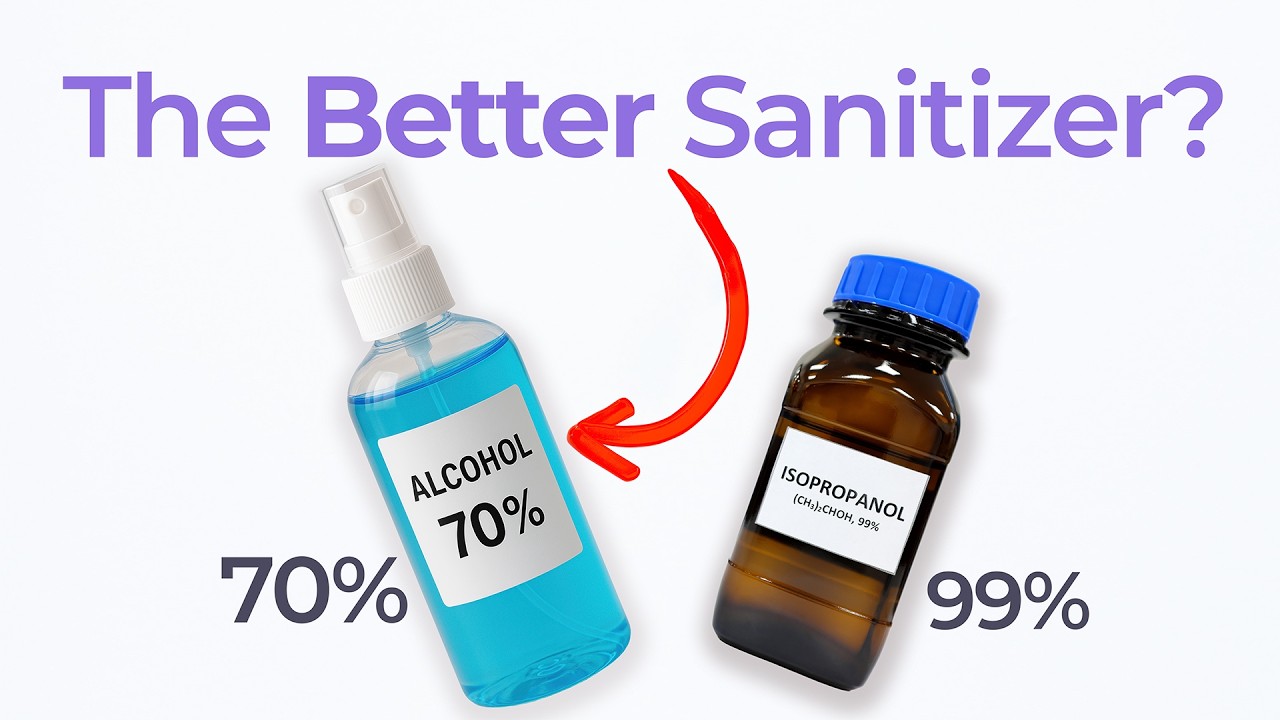
Why is 70% alcohol sanitizer commonly used instead of 100% alcohol? It may seem counterintuitive at first. However, the chemistry of how alcohol kills bacteria explains why a mixture of alcohol and water works best.
In this Bio Break episode, Nick and Nigel explore the science behind hand sanitizer formulations. They discuss how alcohol interacts with bacterial cells, why water improves its effectiveness, and what the additional ingredients in sanitizer actually do.
How Alcohol Disrupts Bacteria
To understand why 70% alcohol sanitizer works so well, it helps to look at how bacteria are structured. Bacteria can be thought of as small sacs surrounded by a membrane made largely of lipids. This membrane helps maintain the right internal conditions for the cell.
When alcohol is applied, it interacts with that membrane. Alcohol molecules are highly polar, which allows them to bind to the phospholipids that make up the membrane. As a result, the membrane structure is disrupted.
This disruption causes the bacterial cell to break apart, a process known as lysis. In addition, alcohol denatures the proteins inside the cell. Once those proteins lose their structure, they can no longer perform their biological functions. Together, these effects kill the bacteria.
Why 100% Alcohol Is Less Effective
It might seem logical that stronger alcohol would kill bacteria faster. However, 100% alcohol actually works less effectively than a diluted mixture.
When pure alcohol is applied to bacteria, it rapidly removes water from the cell. This dehydration can cause the bacteria to become fixed in place. In other words, the cell structure becomes preserved rather than destroyed.
Because of this, the bacteria may later rehydrate and potentially become active again. That is why a small amount of water is critical in sanitizer formulations.
Research and practical experience have shown that alcohol concentrations between about 60% and 80% work best. Within that range, alcohol can penetrate the bacterial membrane and disrupt the cell while also allowing protein denaturation to occur effectively.
Why Hand Sanitizer Contains Other Ingredients
Hand sanitizer formulas often include additional components beyond alcohol and water. These ingredients improve usability and safety.
For example, glycerol is commonly added to help protect the skin. Since people apply sanitizer frequently, this ingredient helps prevent the hands from becoming excessively dry.
Glycerol also thickens the solution slightly. This increased viscosity allows the sanitizer to remain on the skin longer, which helps improve contact time with microbes.
Some sanitizers also contain colorants or other additives. In certain formulations, compounds are included to make the sanitizer unpleasant to drink. These additives discourage accidental or intentional ingestion.
The Chemistry Behind Everyday Hygiene
The chemistry behind hand sanitizer illustrates an important principle in microbiology. Sometimes a balanced formulation works better than the pure ingredient alone.
By combining alcohol with water and supportive ingredients, 70% alcohol sanitizer creates the conditions needed to disrupt bacterial membranes and denature proteins effectively. As a result, this concentration has become the standard for many sanitizer products used in everyday hygiene.
Enjoying Bio Break? Sign up to get new episodes sent to your inbox.
Related Resources

The hourly rate is only a starting point when you choose a medical device engineering firm. Learn how to judge team staffing, in-house disciplines, facilities, ISO 13485 scope, and track record before you sign.

Medtech leaders expect connected products to take over their portfolios within five years. Three years of actual FDA clearance filings show a real climb, just a much more gradual one.

Learn why supply chain, process, cost, and quality gaps stall cleared devices, and why they are decided during design.

From skipping the doers to estimating toward a target budget, these ten project estimation pitfalls explain why good estimates go wrong and what to do instead.
Explore Our Services

Our multidisciplinary teams have all the in-house capabilities to transform your medical device from concept to final product.

Medical device design and development with a commercial launch focus. See how we support clinical trials and facilitate seamless tech transfers.

We help you navigate complex regulatory landscapes to achieve commercial success. Explore our integrated approach to quality and regulatory services.