

Fluorescent Protein Assay Testing in Medical Devices

Understanding the Fluorescent Protein Assay
In this Bio Break episode, Nick Allan and Nigel Syrotuck explain how a fluorescent protein assay helps engineers measure contamination and cleaning performance in medical devices. At StarFish Medical, the team develops controlled soil mixtures that safely simulate bodily fluids. These “artificial soil loads” allow precise testing of how effectively a device can resist or release contaminants.
The Science Behind Soil Load Visualization
To make invisible residues measurable, fluorescent dyes are introduced into the protein-based soil. Nick describes how common assays such as the Bradford Comassi and BCA assay use chemical reactions to bind with protein molecules. When exposed to certain light wavelengths, these compounds absorb and emit light differently, creating measurable fluorescence. This allows researchers to see exactly how much protein remains after cleaning.
Quantifying Cleaning Performance in MedTech
By using fluorescence to detect trace contamination, engineers can go beyond visual inspection. As Nigel and Nick discuss, results compared against a standard curve reveal how well a device resists soil accumulation or supports effective cleaning. These insights guide medical device developers toward safer, more reliable designs that meet regulatory expectations.
Enjoying Bio Break? Sign up to get new episodes sent to your inbox.
Related Resources
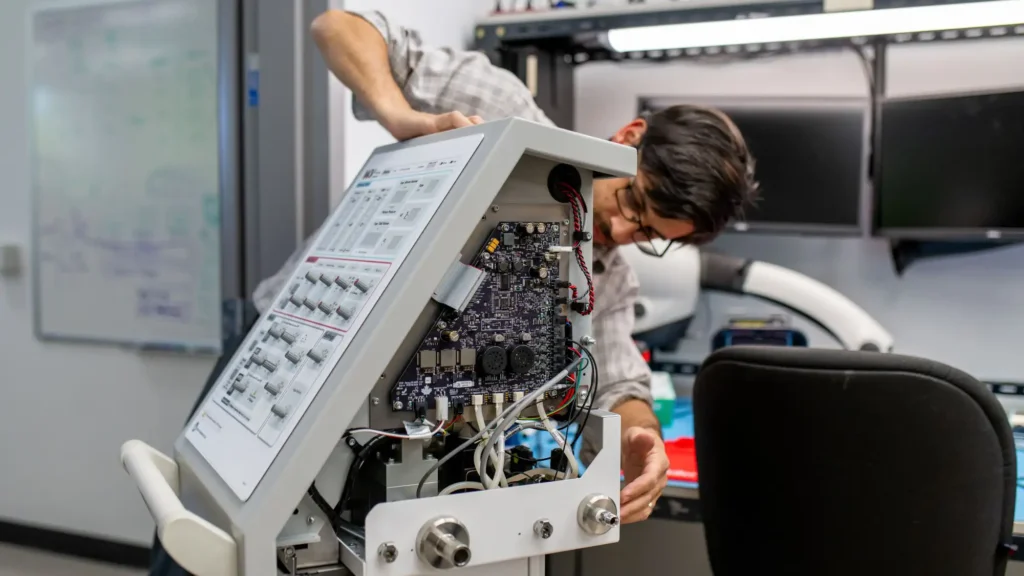
When one team designs, lays out, and brings up a board, knowledge sticks. Splitting that work across specialists looks efficient but creates the risk it’s meant to avoid.

AI coding agents like Claude and Codex are helping EE teams turn concepts into tested hardware in weeks, not months, without adding a new vendor or software dependency.

Choosing an EE partner is a program risk decision, not a staffing decision. Early architecture choices carry through to certification, and the wrong partner can cost far more than their hourly rate suggests.
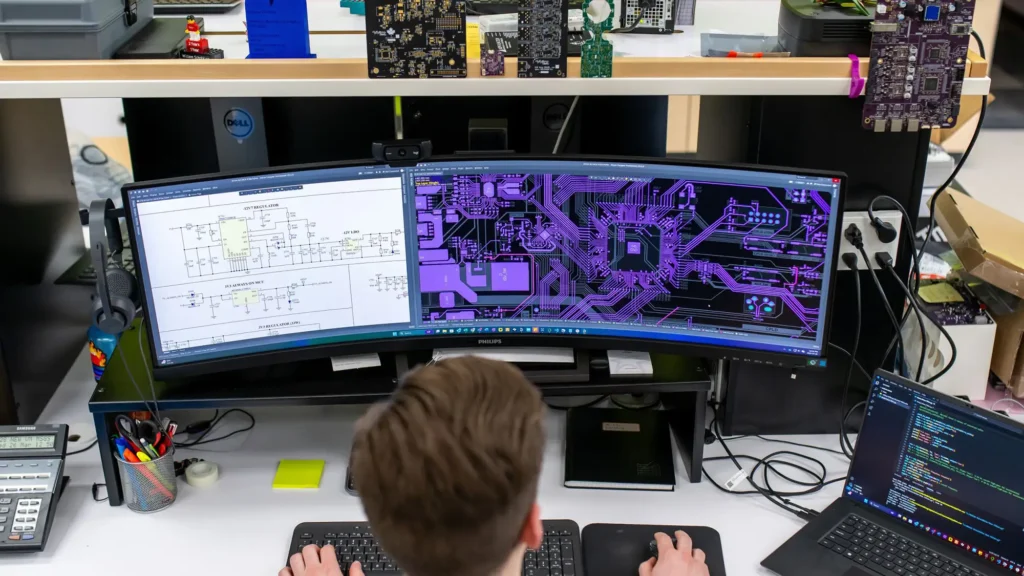
PCB stack-up shapes signal integrity, EMC performance, and manufacturability long before layout begins. Getting layers and reference planes right avoids costly redesigns later.