
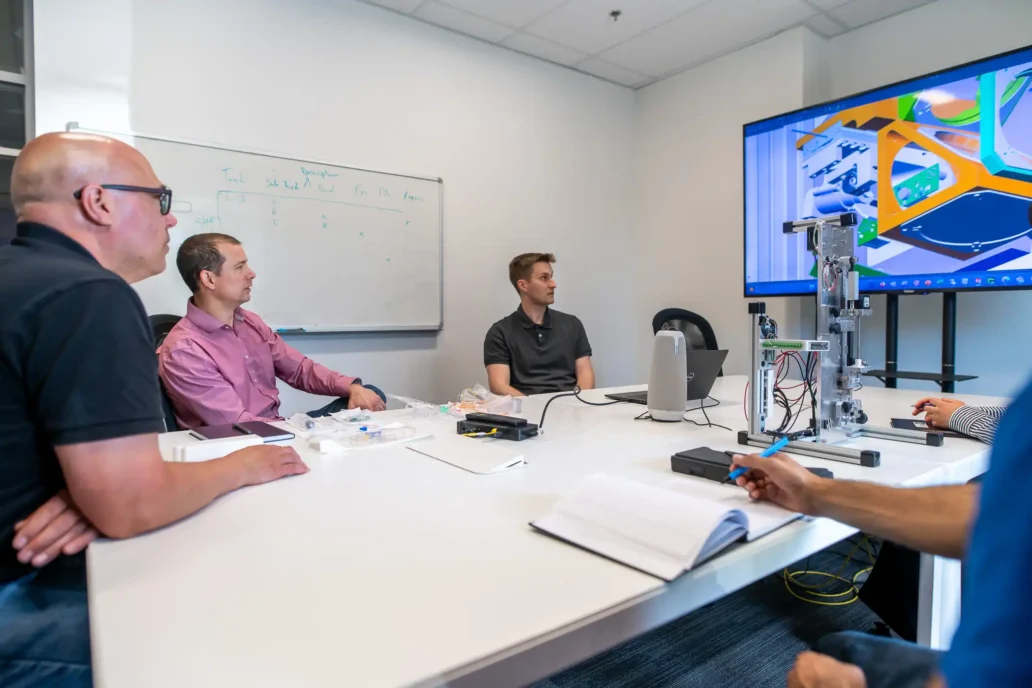
When the CM Says No: What to Do When Your Contract Manufacturer Rejects Your Early-Stage Build
TL;DR
- A no-quote often signals fixable gaps in design, documentation, or market case.
- Balanced specifications and clear DMRs increase CM confidence.
- Early manufacturability planning reduces redesigns and delays.
- Demonstrating market viability lowers perceived risk.
- Early collaboration with a CM helps convert rejection into readiness.
You’ve cleared the toughest engineering hurdles and proven your design works. Then, just as you prepare to scale, your contract manufacturer turns you down. What happened, and what can you do next?
It’s a frustrating moment, but not an uncommon one. The key is understanding why it happened. Contract manufacturers make decisions based on risk, consistency, and how well your build aligns with their existing capabilities.
Sometimes the risk simply outweighs the reward. That doesn’t mean they aren’t open to developing new processes. For early-stage medical devices, market acceptance and validation carry more uncertainty than for established products. the CM may doubt they can recover development costs. Demonstrating strong market potential can shift that equation and make your project worth the risk.
Why Your Contract Manufacturer Might Say No
Your device master record (DMR) may not meet the CM’s expectations for clarity or completeness. A manufacturer wants to know the product they build will meet defined specifications and requirements. If procedures are vague or inconsistent, the chances of failed in-line or end-of-line tests increase. That leads to rework, delays, and costly back-and-forth discussions. Unless rework is billed as time and materials, most CMs won’t take that chance, especially when design issues – not assembly errors – are the root cause.
At the other extreme, specifications can be too tight. Overly stringent tolerances reduce yield and increase costs. Striking the right balance between clarity and practicality is critical. It’s also where a partner who understands both design and manufacturing realities adds the most value.
Building Manufacturability into Early-Stage Design
Even quoting carries costs. When production volumes are low and documentation lacks detail, the combination of low return and high risk can make a CM walk away. Design transfer is expensive, and CMs look to recover those costs through production. They also have to manage capacity, floor space, and efficiency. Some prefer short runs of higher-volume builds followed by downtime, but resetting lines for new orders adds cost and risk. for new products with uncertain demand, that risk often outweighs the opportunity.
Whether you’re mid-development or just starting out, integrating manufacturability early helps avoid these pitfalls. Startups often have limited resources, and addressing manufacturability alongside design challenges prevents costly redesigns later. Involving a CM early also builds buy-in, as they can help identify risks before they become reasons to say no.
Demonstrating Market Viability for CM Buy-In
A leaner feature set can be your strongest strategy. launching with a smaller core feature set allows you to optimize what truly matters, validate your market sooner, and prove commercial traction. Demonstrating long-term viability helps reassure CMs that your product – and company – are worth investing in.
Turning a No into a Better Opportunity
A no-quote can feel like a setback, but it often points to something valuable: a chance to strengthen your design, documentation, or business case. manufacturing process development deserves the same recognition as product design. Building the thousandth unit to perform exactly like the first is its own form of innovation. CMs seek clients who understand that and who reduce risk through sound design transfer, balanced specifications, and clear market validation.
Dana Trousil is a StarFish Medical Mechanical Engineering Team Manager. He has successfully launched many products, from small volume production up to moderate volumes (up to 1 million parts per year), with experience in injection moulding and a variety of other processes.
Images: StarFish Medical
Related Resources
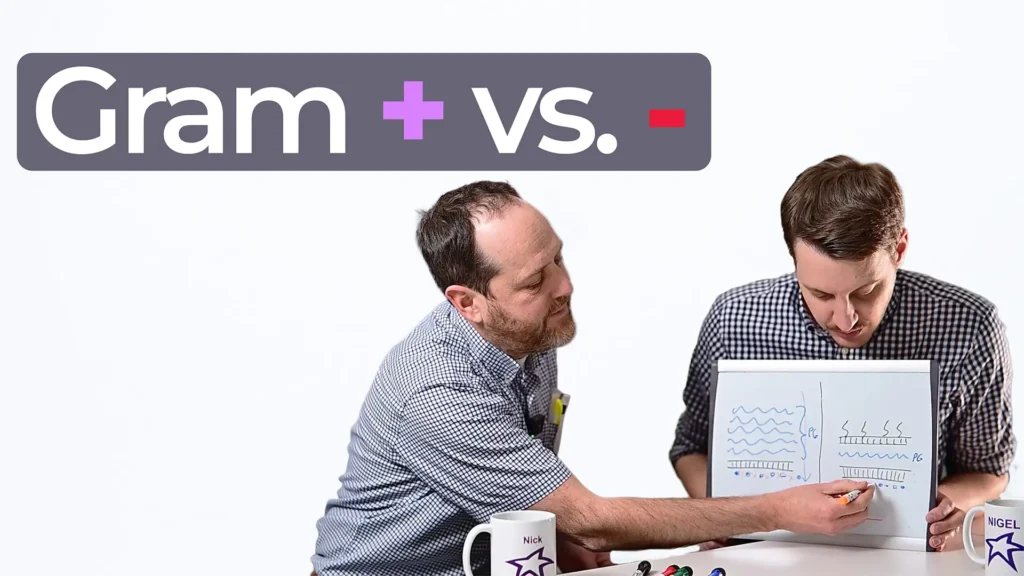
Understanding gram positive vs negative bacteria is essential when studying sterility, microbiology, and antibiotic effectiveness. While many people think the difference is only about staining, the reality is much deeper.

Nick and Nigel explore the science behind hand sanitizer formulations. They discuss how alcohol interacts with bacterial cells, why water improves its effectiveness, and what the additional ingredients in sanitizer actually do.

Scott Phillips, CEO of StarFish Medical, sits down with Peter van der Velden, Managing General Partner at Lumira Ventures, to explore the strategic thinking behind major MedTech transactions and investments.

Computer vision technologies such as convolutional neural networks and vision transformers are transforming how AI analyzes medical images, each offering distinct advantages depending on the application and computing environment.