
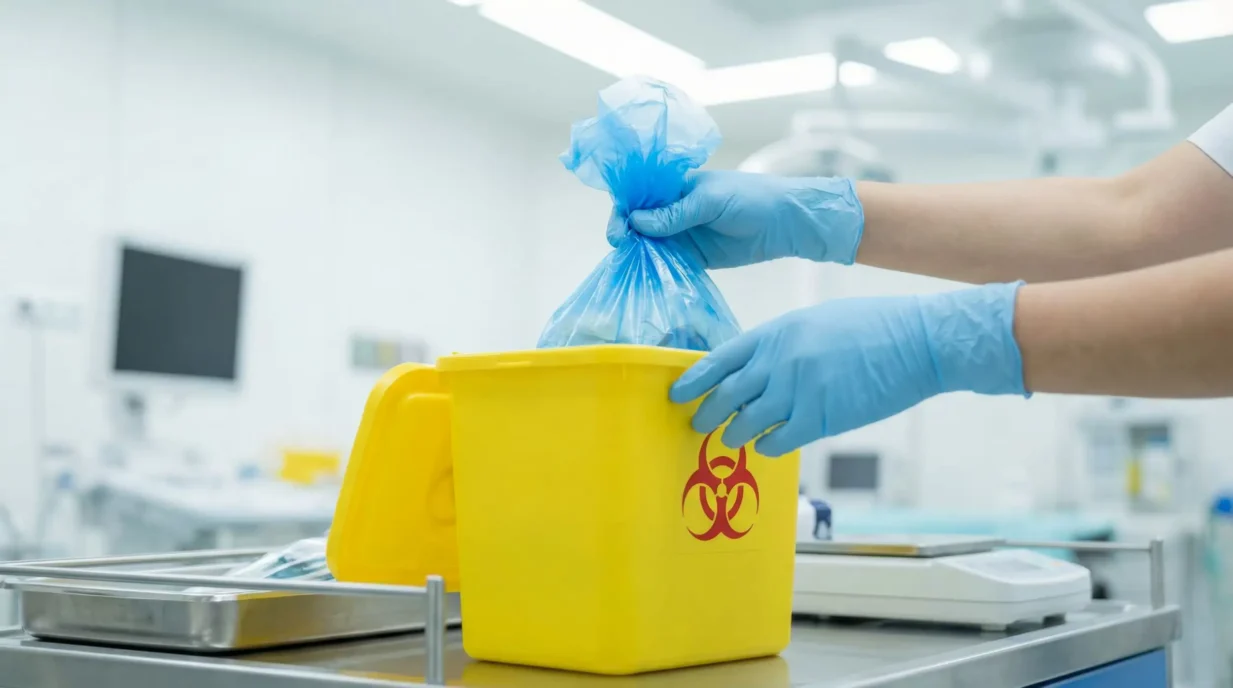
Wasted Potential: The Reality of Medical Waste by the Numbers
TL;DR
- Healthcare accounts for 5–8% of national carbon emissions, with about 20% of healthcare waste classified as hazardous and requiring specialized disposal.
- Incineration and steam autoclaving handle most hazardous medical waste, each with different environmental, operational, and cost trade-offs.
- Operating rooms generate large volumes of waste, and studies suggest up to 90% of materials placed in infectious waste streams could be disposed of as regular waste.
- Medical device developers can reduce waste by minimizing disposable materials, exploring reusable components, and selecting recyclable materials with clear labeling.
Did you know that 5-8% of total national carbon footprints come from the healthcare sector? Much of this (around 80%) is general waste – such as from office work – and the rest (~20%) requires special handling due to its dangerous nature.
Let’s examine hazardous medical waste types, their treatments, and what can be done better.
Types of Hazardous Medical Waste
- Organics (tissues, contaminated medical devices) (15% of medical sector total)[1]
- Chemical/ Pharmaceutical (3%)
- Sharps/needles (1%)
- Genotoxic and heavy metals (1%)
How is Hazardous Medical Waste Disposed Of?
An estimated five sixths (~83%) of hazardous waste is either incinerated or autoclaved.
- Incinerated (roughly half[2])
- There are a few methods, but generally speaking the waste is heated to over 1000oC.
- Sometimes incinerated residue is further processed (liquid, particulate, or air pollution control devices – though these can be rare (2% in one study[3]))
- Steam Autoclaved (roughly one third)
- Comparison
- Incinerated residue is only about 3% of the original mass[6], whereas autoclaving does not transform any mass to gas, for better or for worse.
- Autoclave machines require less maintenance but cost more up front[7].
- Autoclave machines tend to function more effectively, meaning the resultant materials tend to have fewer surviving microbes.
- Autoclave machines don’t have to be as centralized to be efficient: some waste processing machines are as small as ovens and operate in hospitals.
- Both have environmental drawbacks and mitigations depending on the facility and location, meaning one is not always more ‘environmentally friendly’ than the other.[8]
- A note on batteries:
- Disposable or reusable non-contaminated batteries are disposed of the same way you would at home: landfill or recycling
- Disposable contaminated batteries, like those embedded in medical devices, are processed along with the device they are embedded in (incinerated or autoclaved).
- Reusable contaminated batteries are first disinfected and then recycled. Reusable lithium-ion batteries generally cannot be incinerated.
What Waste Materials are Generated by Medical Devices?
- Shipping Containers
- Often cardboard with plastic packing
- Sterile Barriers
- Common materials include Polyethylene, Tyvek, PVC, PA (nylon).
- Backer Cards, Wrapping, or Other Support Materials
- Backer cards are often Polyethylene, Polystyrene, paperboard
- Sterile wrapping can be made from Polypropylene
- The Medical Device Itself
- Often plastic, sometimes includes some metal
Are These Materials Recycled?
In theory and if clean, the outer packaging, sterile barrier, and support materials can all be disposed of in the same manner as office waste: recycled or landfilled. In reality, this doesn’t happen. Here are some facts[9] [10]:
- The medical device industry is trending away from reusable towards disposables.
- 20-33% of hazardous healthcare waste comes from operating rooms (ORs)
- Each operation generates about 12kg of waste, much of which is draping, gowns, and breathing tubes. Blue wrap (sterile wrap) alone accounts for 11.5% or 1.4kg of all OR waste.
- OR waste is supposed to be separated into general waste and infectious waste, but up to 90% of material sorted into the infectious waste system should have been sorted as common waste.
- Up to 40% of that waste is packaging materials including blue wrap.
- Often, syringes and needles are disposed of together in sharps bins unnecessarily. Sharps are 200x more expensive to dispose of by weight.
- The greatest barrier to recycling was found, in one study, to be confusion about what is recyclable. The same study found that only 20% of medical plastics are labelled with recycling symbols.
Other Points of Interest
Concerns are higher in developing countries, where improperly handled waste can cause more acute pollution or harms, such as leaching into water tables or needle stick injuries.
Sterilization, especially radiation sterilization, can change the chemical structure of plastics. How this may impact their recyclability would have to be examined on a case-by-case basis.
What Can Medical Devices Do Better?
The first and most effective action medical device designers can take it to try to limit the total amount of non-reusable materials they include in their devices. Reduce
Today’s fast-paced healthcare system has a strong desire for simplicity, but another effective option is working with users to understand if a medical device, or portions thereof, can be reusable instead of disposable. Reuse
Lastly, choosing materials that can be recycled where possible, and clearly labelling materials, is a simple solution that will help reduce user confusion. This is equally important for packaging as well as the medical devices themselves, and typically much easier. Recycle
But My Program is Already Complex, Tight on Budget, and Our Focus Is Patient Outcomes…
Most programs likely have a few opportunities for simple actions that don’t affect patient outcomes, don’t add much complexity or cost, and can make a real impact on waste. Educating yourself on how medical waste works will help you identify these actions early and accurately.
Environmental issues aside, hazardous medical waste disposal is much more expensive than common waste disposal, and it is reasonable to assume that the value analysis committees who purchase medical devices are aware of this. Between environmental stewardship and cost savings, you might find more desire with your stakeholders to grab the low hanging fruit than you’d think when it comes to reducing medical waste.
References
[1] hcwmanagement-factsheet-rfhe.pdf
[2] What Is a Medical Waste Incinerator and How Does it Work? | Knowledge Center | Daniels Health
[3] https://www3.epa.gov/ttnchie1/ap42/ch02/final/c02s03.pdf
[4] Autoclave vs incineration: which is best for medical waste disposal?
[5] Autoclaves For Medical Waste 101 | Healthcare | Stericycle
[6] Autoclave or Incinerator for Medical Waste, which one is better?
[7] Incineration or Autoclave? A Comparative Study in Isfahan Hospitals Waste Management System (2010) – PMC
[8] Autoclave Vs. Incinerator: Which is the right choice for you
[9] Managing barriers to recycling in the operating room – ScienceDirect
[10] (PDF) Reducing the Environmental Impact of Sterilization Packaging for Surgical Instruments in the Operating Room: A Comparative Life Cycle Assessment of Disposable versus Reusable Systems
Nigel Syrotuck is a StarFish Medical Project Engineer and frequent guest blogger for medical device media including MD+DI, Medical Product Outsourcing, and Medtech Intelligence. He works on projects big and small and blogs on everything in-between.
Images: Adobe Stock
Related Resources
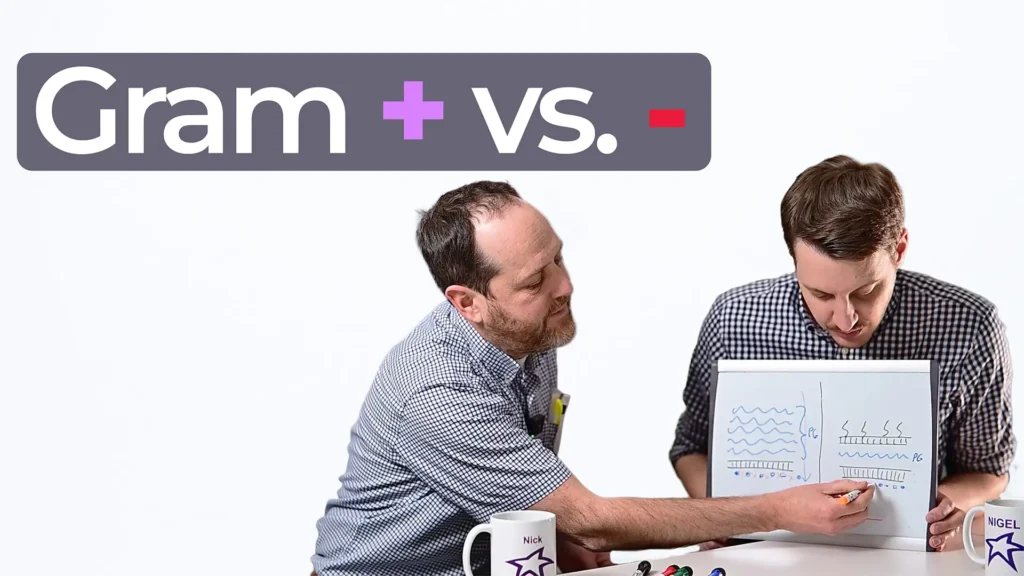
Understanding gram positive vs negative bacteria is essential when studying sterility, microbiology, and antibiotic effectiveness. While many people think the difference is only about staining, the reality is much deeper. In this Bio Break episode, Nick and Nigel walk through the structural differences between these bacteria and explain how those differences impact how they behave and how they are treated.
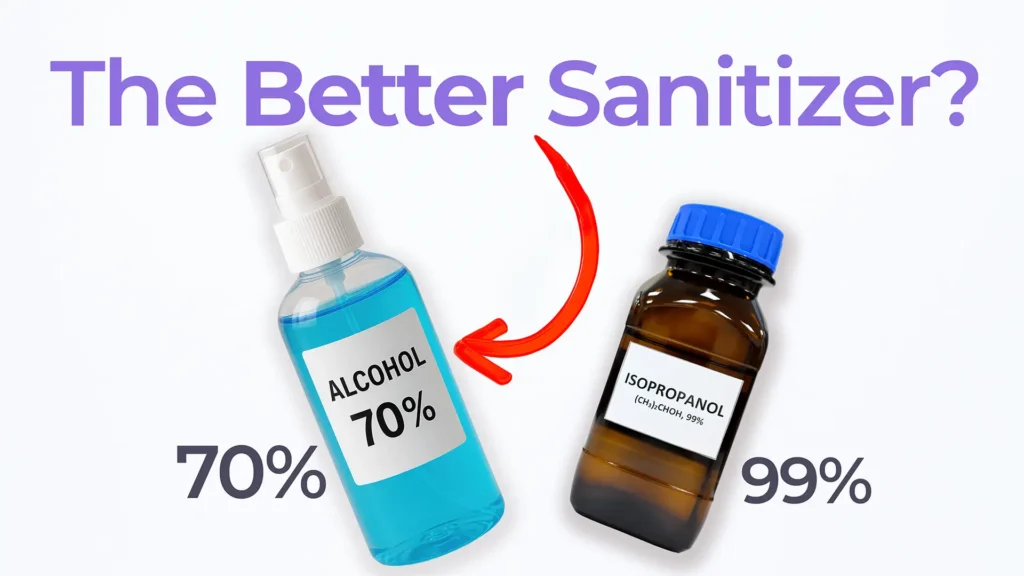
Nick and Nigel explore the science behind hand sanitizer formulations. They discuss how alcohol interacts with bacterial cells, why water improves its effectiveness, and what the additional ingredients in sanitizer actually do.

Scott Phillips, CEO of StarFish Medical, sits down with Peter van der Velden, Managing General Partner at Lumira Ventures, to explore the strategic thinking behind major MedTech transactions and investments.

Many MedTech founders assume their company’s peak valuation will occur at regulatory clearance or product launch. In a recent article for Medical Product Outsourcing, StarFish Medical CEO Scott Phillips challenges that assumption.