Resource Centre

Discover a wealth of knowledge and insights from the experts at StarFish Medical. Our Resource Centre offers product development tips, reviews of new and cutting-edge technologies, and in-depth articles on regulatory updates and compliance in medical device development.

Archive Filters
Actions
  • X-ray image of a human chest showing bones in high contrast. A visible electronic device, likely a pacemaker or implant, is located in the upper left chest area. A bold red arrow points to the device with a label in black and white text reading “definitely not bone.”

    Mark and Ariana explore the surprising versatility of barium sulfate—a material used widely in both diagnostic procedures and medical device manufacturing. While many recognize it as the contrast agent you drink before an X-ray, it’s also a key additive that enhances plastic components across the healthcare industry.

  • Gloved hand holding a test tube filled with red liquid, with a large red arrow pointing at the tube on a blue gradient background.

    We explore a groundbreaking shift in how Alzheimer’s disease may soon be diagnosed. Instead of relying on invasive spinal taps or costly PET scans, researchers have developed a blood test that detects key proteins associated with the disease—offering a more accessible and patient-friendly screening method.

  • A bearded man in a denim shirt uses a handheld breathalyzer device. To the left, bold text reads: "How Breath Testing REALLY works," with the word "REALLY" emphasized in bright purple.

    We explore how breath testing in medical devices is transforming diagnostics. Mark Drlik walks through how this technology supports everything from roadside impairment detection to gastrointestinal analysis.

  • A transparent capsule-shaped ingestible medical device is shown on the right, revealing internal electronics, circuits, and components. On the left, bold purple text reads “Ingestible Medical Devices” against a clean white background.

    Mark Drlik and Ariana Wilson introduce the fascinating world of ingestible capsules—tiny, swallowable medical devices that are revolutionizing gastrointestinal health monitoring and targeted therapy.

  • FDA use of AI in medical device review - A computer chip labeled "AI" on the left side is connected by a black arrow pointing to the right, where wooden blocks stacked vertically spell out "FDA." Above the image is a bold caption that says "They're doing it!" in white text on a black background. The image suggests the FDA is adopting AI technology.

    Ariana Wilson and Mark Drlik dive into how the FDA is adopting artificial intelligence to modernize its regulatory processes. With a new chief AI officer in place and rumors of collaboration with OpenAI, the agency is taking major steps to automate review workflows and improve efficiency.

  • A close-up view of a transparent smart bandage with an embedded microchip adhered to human skin. The circuit lines are visible on the bandage surface. Overlay text reads “Theranostic? Smart Bandages” with “Theranostic?” in bold purple and “Smart Bandages” in bold black, set against a soft blue and skin-toned background.

    A theranostic wound dressing does more than cover a cut—it actively detects infection and delivers targeted treatment.

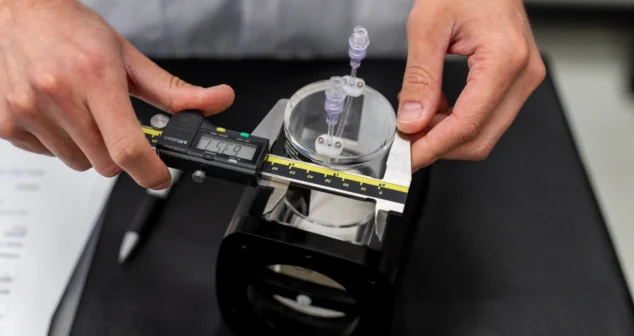
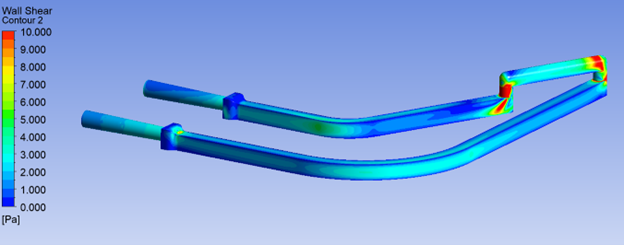
  • A laboratory or engineering workstation featuring a high-precision stereo microscope mounted on an articulated arm, positioned beside two computer monitors displaying 3D CAD models or imaging of a complex mechanical or biomedical device. The workspace also includes a keyboard, mouse, and a metallic container, all situated on a clean white desk in a dimly lit, modern lab environment.

    In a sophisticated world of ever increasing complexity, we need our tools to evolve alongside us and assist in complex decision making, allowing us to understand the consequences of choices ahead. Computational Modelling and Simulation (CM&S) is emerging as an essential tool in building evidence for medical device development.

  • A laptop on a wooden desk displays a digital document icon on its screen. Beside it, bold text reads "Design History Files Explained," highlighting the topic of regulatory documentation in medical device development.

    Nick and Joris break down what a DHF is, why it's required, and how it plays a vital role throughout the development lifecycle.

  • Two colorful paper boats—one red and one yellow—float on a blue background with illustrated white waves beneath them. Bold text reads "From Idea to Impact," symbolizing innovation and progress in medical device development.

    Nick Allan and Joris van der Heijden revisit one of StarFish Medical’s most successful Pathfinder journeys, showcasing how a bold research concept evolved into a fully realized clinical diagnostic device.