

Proof of Concept Prototypes in Medical Device Development
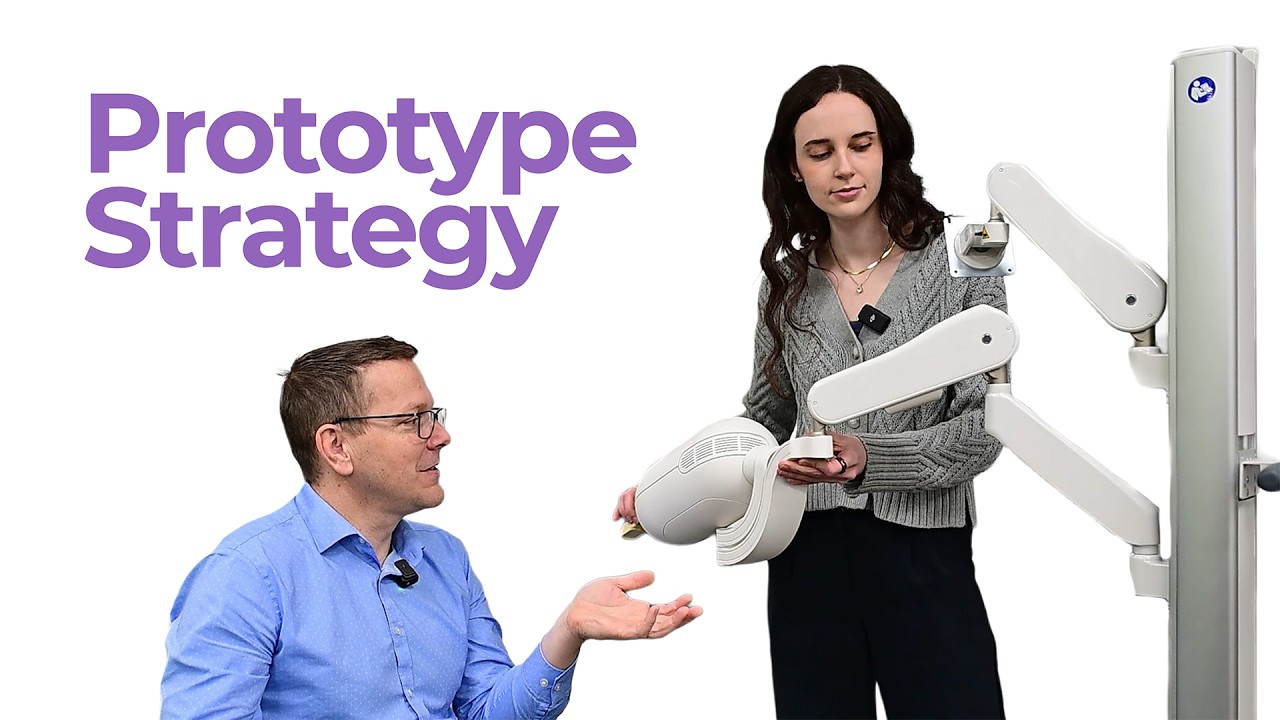
Medical device teams build proof of concept prototypes to answer the most important question in development. What risk must be proven out first?
In this episode of MedDevice by Design, Ariana and Mark explore how prototype strategy helps teams reduce technical risk and accelerate progress. Early prototypes are not meant to look polished. Instead, they focus on testing specific concepts quickly and efficiently before moving toward more integrated systems.
During development, prototypes evolve from rough experiments to more refined devices. Understanding what type of prototype to build and when to build it can save both time and cost.
Why Proof of Concept Prototypes Matter
Every medical device project contains technical unknowns. The goal of proof of concept prototypes is to identify the biggest risk and address it as early as possible.
For example, engineers may need to determine whether a mechanism works as intended. In other cases, the question may be about usability. Will clinicians or patients interact with the device comfortably and intuitively?
Instead of building a complete device immediately, teams isolate these questions and design prototypes specifically to answer them. This approach allows developers to move forward with confidence while avoiding unnecessary complexity.
As Mark explains, the key is efficiency. The prototype should provide answers quickly so the team can move to the next iteration.
Functional vs Form Prototypes
Most proof of concept work falls into two categories. Functional prototypes and form prototypes.
A functional prototype focuses on whether the device actually works. These prototypes often expose the internal mechanisms without worrying about appearance or ergonomics. The usability may be poor, but that is acceptable if the goal is to confirm that the core technology performs correctly.
For example, engineers may build a prototype that only demonstrates the internal mechanical function of a device. Similarly, early electronics prototypes may include exposed boards, wires, or breakout boards. These designs look unfinished because they prioritize rapid testing.
A form prototype, on the other hand, focuses on how a device looks and feels to a user. These models are often produced using 3D printing methods such as SLA printing. They allow teams to evaluate grip, positioning, and user interaction before the internal components are finalized.
By separating these questions, development teams can explore multiple design directions without committing to expensive integrated builds.
Tools Used to Build Proof of Concept Prototypes
Fast iteration depends on having the right tools available.
In the StarFish Medical development labs, engineers use several technologies to create and evaluate prototypes. These include:
- 3D printers for rapid form models
- Vacuum forming tools for quick enclosure concepts
- Mechanical test equipment such as tensile testers
- Environmental chambers to evaluate performance under different conditions
- Microscopes and inspection tools to analyze prototype results
Electrical development labs also support early testing. For example, engineers can evaluate electrostatic discharge resilience in early electronics designs.
Having these tools available in house allows teams to move quickly from concept to experiment.
When to Build Integrated Prototypes
Eventually, teams must combine form and function into a single integrated prototype. However, the right time to do this depends on the development risk.
Sometimes an integrated prototype is required very early. Mark describes an example involving an ingestible capsule that determines its location in the gastrointestinal tract. Because the device must operate inside the GI tract, the prototype needed to be integrated quickly in order to test the core concept.
In other situations, integration happens later. Once both functional and form risks are reduced, teams may build integrated prototypes to support commercial goals such as market validation or manufacturing scale up.
Ultimately, the purpose of proof of concept work is to reach the next development milestone in the most efficient way possible.
Enjoying MedDevice by Design? Sign up to get new episodes sent to your inbox.
Related Resources

The hourly rate is only a starting point when you choose a medical device engineering firm. Learn how to judge team staffing, in-house disciplines, facilities, ISO 13485 scope, and track record before you sign.

Medtech leaders expect connected products to take over their portfolios within five years. Three years of actual FDA clearance filings show a real climb, just a much more gradual one.

Learn why supply chain, process, cost, and quality gaps stall cleared devices, and why they are decided during design.

From skipping the doers to estimating toward a target budget, these ten project estimation pitfalls explain why good estimates go wrong and what to do instead.
Explore Our Services

Our multidisciplinary teams have all the in-house capabilities to transform your medical device from concept to final product.

Medical device design and development with a commercial launch focus. See how we support clinical trials and facilitate seamless tech transfers.

We help you navigate complex regulatory landscapes to achieve commercial success. Explore our integrated approach to quality and regulatory services.