

Clinical Prototypes for Human Use: What You Need to Know
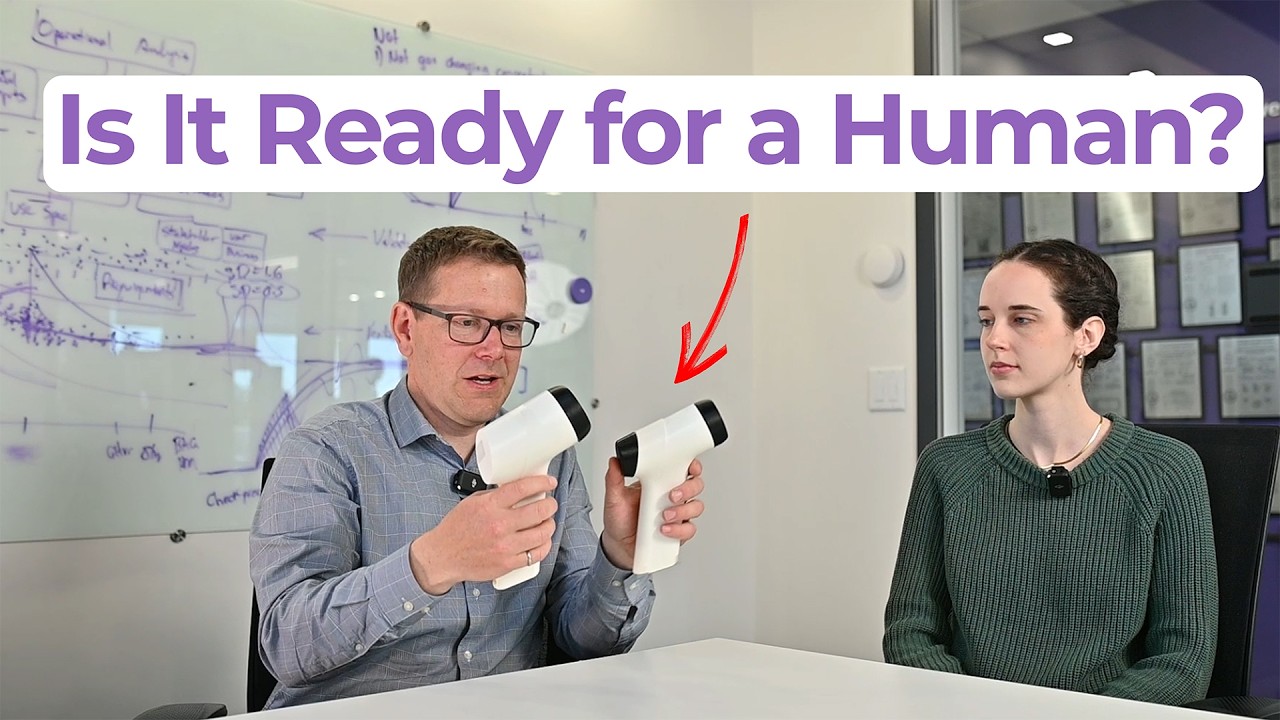
At some point in development, someone asks the question: can we put this on a person yet?
It sounds straightforward. It isn’t. The answer depends on what you’re trying to learn, what the device actually does, and whether anyone, a clinician, an IRB, or the FDA, agrees that the risk is worth it.
In this episode of MedDevice by Design, Ariana Wilson and Mark Drlik walk through what separates a clinical prototype from a proof-of-concept build, what determines how much testing and documentation you actually need, and where the regulatory line between significant risk and non-significant risk falls.
The First Question Isn’t “Is It Ready?” It’s “What Are You Trying to Answer?”
Before anything else, the intent of the prototype defines everything downstream. Are you collecting data for a marketing claim? Testing whether a form factor works in a surgical environment? Validating that a device survives a specific biological transit? Each of those questions pulls you down a different path in terms of controls, approvals, and documentation.
Significant Risk vs Non-Significant Risk
The regulatory designation matters more than most teams expect early in development. Significant risk devices get escalated to the FDA through an Investigational Device Exemption. Non-significant risk devices are reviewed by an IRB. An ingestible capsule, as Mark explains, often lands in the non-significant risk category, even though someone is swallowing it. That classification isn’t intuitive, and getting it wrong can derail a study.
Maturity and Change Control
Running a clinical study on a device you can’t describe precisely is a problem you won’t notice until later. If four versions of a device were tested and you don’t have a record of what each one was, the data you collected may not hold up. Change control for clinical prototypes isn’t bureaucracy. It’s what makes the data defensible.
The episode covers form models, ingestible capsules, and a high-risk spinal delivery cannula as concrete examples of how these factors play out across very different device types.
Enjoying MedDevice by Design? Sign up to get new episodes sent to your inbox.
Related Resources

The hourly rate is only a starting point when you choose a medical device engineering firm. Learn how to judge team staffing, in-house disciplines, facilities, ISO 13485 scope, and track record before you sign.

Medtech leaders expect connected products to take over their portfolios within five years. Three years of actual FDA clearance filings show a real climb, just a much more gradual one.

Learn why supply chain, process, cost, and quality gaps stall cleared devices, and why they are decided during design.

From skipping the doers to estimating toward a target budget, these ten project estimation pitfalls explain why good estimates go wrong and what to do instead.
Explore Our Services

Our multidisciplinary teams have all the in-house capabilities to transform your medical device from concept to final product.

Medical device design and development with a commercial launch focus. See how we support clinical trials and facilitate seamless tech transfers.

We help you navigate complex regulatory landscapes to achieve commercial success. Explore our integrated approach to quality and regulatory services.