

Hardware to Intelligence: Building a Reimbursement Strategy for Intelligent Medical Devices
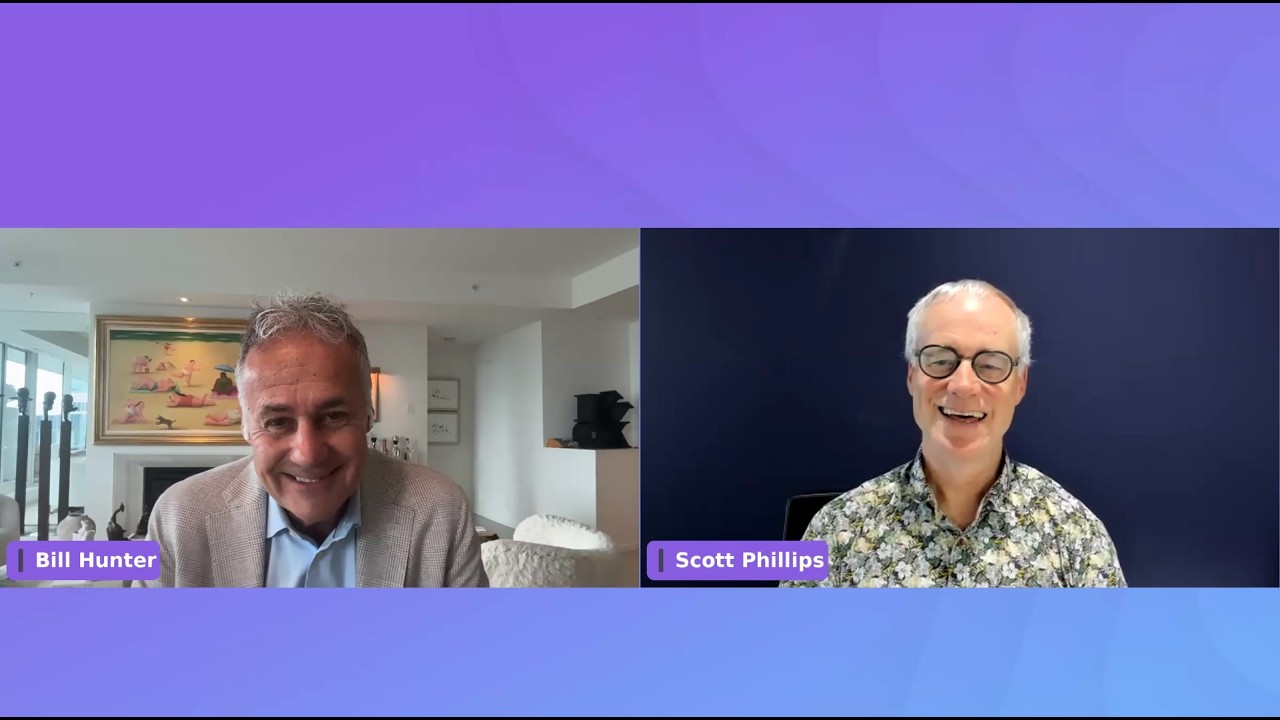
“Hardware to Intelligence: Building a Reimbursement Strategy for Intelligent Medical Devices” is now available as an on-demand webinar. In this MedTech Unscripted conversation, Scott Phillips, CEO of StarFish Medical, sits down with Dr. Bill Hunter, MD, founding member, CEO, and CMO of Canary Medical and pioneer of the Persona IQ smart knee implant, to explore what it actually takes to get paid for the data an intelligent medical device generates long after it’s implanted.
Why Reimbursement, Not Technology, Decides Medtech’s AI Era
Bill spent the first part of his career solving medical device problems by putting drugs onto devices, work that led to Angiotech’s drug-eluting stent technology and more than 200 patents to his name. Watching smartphones learn to sense location and motion, he began asking why implants couldn’t do the same, and founded Canary Medical on the idea that adding power, sensors, and transmission to an inert device could turn it into a source of ongoing clinical data. The company’s first embodiment became a smart knee implant, developed with Zimmer Biomet, though Bill has been clear the original intent was a broader data platform, not an orthopedics company.
That path was not an easy sell. Tech investors saw a regulated medical device and walked away; traditional medtech investors couldn’t get comfortable with a business model built on data rather than device features. Canary funded its own path to FDA approval as a result. Zimmer Biomet’s interest, by Bill’s account, grew out of a wider shift already underway in orthopedics: Stryker’s Mako robotics platform was gaining ground, and other orthopedic companies were starting to move into robotics too. As Zimmer Biomet became more focused on technology, the idea that its implants could become advanced enough to communicate with surgical robots fit its own push toward a more digital product line, a shift Bill says mattered more to the partnership than any early business case for the data itself.
The bigger shift Bill describes is in how medical devices get paid for. Under fee-for-service reimbursement, complications and readmissions generate additional revenue; under episode-of-care reimbursement, a single bundled payment covers a fixed window, so preventing complications becomes the financially rational choice instead of an afterthought. He points to a CMS rule, finalized just weeks before this conversation, that reshapes how hospitals across the United States get reimbursed for a major category of surgical implants. Bill calls it the seminal event in his company’s history, and the clearest signal yet that reimbursement, not device capability, is what determines whether an intelligent medical device actually reaches the market it was built for.
Drawing on the analogy of Holter monitoring, Bill lays out how a physiologic data stream evolves once it exists: from simple monitoring, to recognizing abnormal patterns, to diagnosis, to predicting problems before they happen. He argues that pattern holds regardless of the device generating the data, and that it marks the real transition from a device mindset (build a better widget, get paid for the widget) to a data mindset, a fundamentally different business built on proprietary data and network effects rather than features alone.
This recording is a useful resource for MedTech founders, executives, and product teams building connected or data-generating devices. It offers a candid, specific look at how reimbursement structures, not just technical capability, determine whether an intelligent medical device succeeds, along with practical detail on how Canary validated its implant before human trials and how it has approached protecting a data-driven business from disruption. The session closes with a live audience Q&A covering both of those questions directly.
Watch the Recording
Thank you. Enjoy the recording!
Presenter Bios:

Bill Hunter
Dr. Bill Hunter is the Founding Member, CEO and CMO of Canary Medical, a medical technology company pioneering active implantable platforms and AI-driven analytics to build a future where connected devices continuously inform treatment and lower the overall cost of healthcare.
Bill brings more than 30 years of experience in healthcare as a former practicing physician, serial medtech entrepreneur and chief executive. He is a lifelong inventor with over 200 patents and patent applications. He was involved in the discovery and development of the TAXUS® Coronary Drug-Eluting Stent, the Zilver PTX® Peripheral Drug-Eluting Stent, paclitaxel-eluting balloons, the Quill® barbed wound closure device and Persona IQ® The Smart Knee.
Bill holds a Doctor of Medicine from University of British Columbia, a Master of Science from University of British Columbia and a Bachelor of Science from McGill University.

Scott Phillips
Scott holds a degree in Engineering Physics from the University of British Columbia. Prior to starting StarFish, he worked in diverse areas such as lithium battery development and manufacturing, UV spectroscopy instrumentation and hi-fi audio speakers. Under his leadership StarFish has grown into a diverse professional organization with clients around the world and 100% focus on medical devices. Scott is a past Chair and current member of the LifeSciences British Columbia board, member of the 2022 VIATEC Board of Directors, Fellow of The Canadian Academy of Engineering, winner of the EY Entrepreneur Of The Year™ 2017 Pacific Awards Technology category, 2017 recipient of the VIATEC Technology Champion award, and volunteers with Junior Achievement, Entrepreneurs Organization, and University of British Columbia.
Related Resources

The hourly rate is only a starting point when you choose a medical device engineering firm. Learn how to judge team staffing, in-house disciplines, facilities, ISO 13485 scope, and track record before you sign.

Medtech leaders expect connected products to take over their portfolios within five years. Three years of actual FDA clearance filings show a real climb, just a much more gradual one.

Learn why supply chain, process, cost, and quality gaps stall cleared devices, and why they are decided during design.

From skipping the doers to estimating toward a target budget, these ten project estimation pitfalls explain why good estimates go wrong and what to do instead.
Explore Our Services

Our multidisciplinary teams have all the in-house capabilities to transform your medical device from concept to final product.

Medical device design and development with a commercial launch focus. See how we support clinical trials and facilitate seamless tech transfers.

We help you navigate complex regulatory landscapes to achieve commercial success. Explore our integrated approach to quality and regulatory services.