

Understanding and Evaluating Comfort in Medical Device Design
TL;DR
- Comfort directly affects whether users adopt and consistently use a medical device, making it a design requirement, not an optional feature.
- The most reliable comfort assessments combine open-ended qualitative questions, structured rating scales (NRS, VAS, Borg CR-10), and objective methods (pressure mapping, EMG, postural analysis).
- A repeated-measures design, where each participant tests more than one condition, increases statistical power and is particularly valuable in comfort research given high individual variability.
- Comfort perception varies by body region; tools like adapted body diagrams and pressure sensors help isolate which interface areas are causing problems.
- Evaluating comfort in context, using the intended task and device setup, produces more valid results than out-of-context testing.
On a recent longer flight, I found myself shifting in my seat trying to relieve pressure points and find a comfortable position. It got me thinking about how designers determine whether a plane seat is comfortable enough for passengers to sit for hours, what methods they use, and how this affects design decisions.
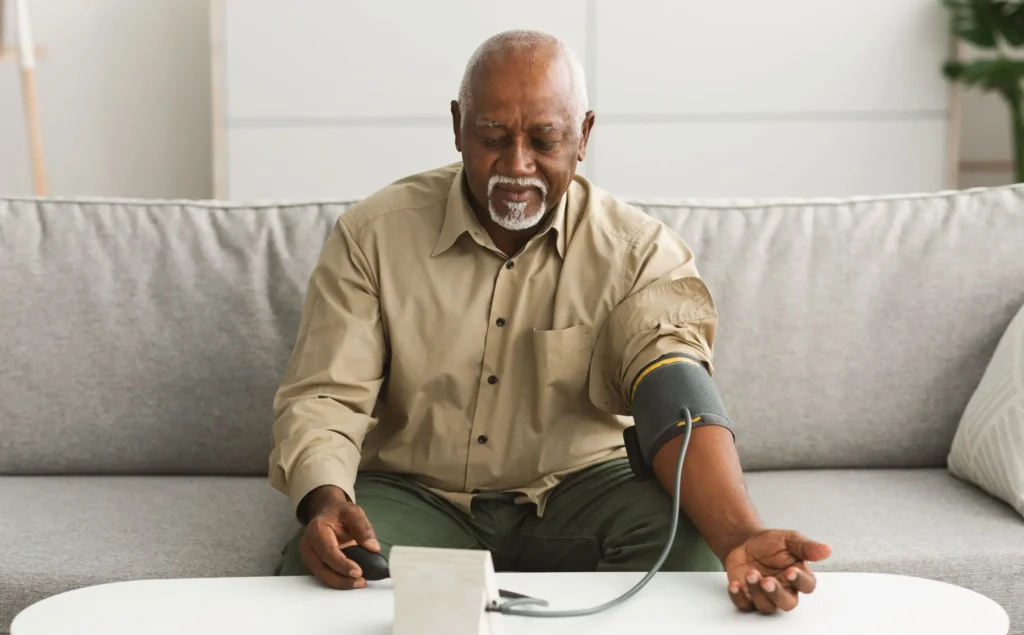
The same question applies to medical devices. Medical devices often interact directly with patients, operators, or both. Medical devices may be wearable, implantable, prosthetic, hand-held, cart-based, or designed to support the user during a task. User comfort, however subjective, directly affects user satisfaction, use compliance, and device adoption. Yet comfort remains a challenge to define and measure, despite being integral to a device’s success.
Comfort is something we evaluate constantly in our everyday lives, often without even noticing. We sense whether a chair supports us well, or a pair of shoes has a pressure point, clothing is too tight or itchy, or whether our glasses leave marks on our nose. These assessments influence how we feel, behave, and perform.
Researchers have described comfort as “a pleasant state of physiological, psychological, or physical harmony between a human and their environment,” while discomfort is “an unpleasant state of the human body in reaction to its physical environment” (Vink P. and Hallbeck S., 2012). Because comfort encompasses a broad range of sensory and cognitive inputs, including tactile, thermal, auditory, visual, and emotional, this blog narrows its focus to musculoskeletal comfort, a foundational element in medical device usability.
How Designers Measure Comfort: Tools, Scales, and What They Reveal
The most straightforward method of assessing comfort is to ask users directly. An open-ended question such as “Can you describe how the device felt to use?” helps participants tune into their sensory experience.
However, relying solely on open-ended questioning has limitations. Responses are difficult to standardize and quantify across participants. To address this, a wide range of comfort questionnaires and rating scales has been developed. As summarized by Anjani et al., these tools span many domains and applications (Anjani S., 2021).
Common scale types include the following:
- Numeric Rating Scales (NRS): typically uses a Likert scale to assess a user’s response. A Likert scale captures how strongly a participant agrees or disagrees with a specific statement, typically on a 1-to-5 range from strongly disagree to strongly agree. Other scales, such as the Borg CR-10, serve similar functions.
- Graphical Rating Scales (GRS): uses visuals to indicate response, such as colors, faces, or stars.
- Verbal Descriptor Scales (VDS): uses words rather than numbers to record a user’s response.
- Visual Analogue Scales (VAS): uses a continuous line on which users mark their perceived comfort level. The endpoints are typically labeled “very uncomfortable” and “very comfortable.”
These can be used during or after device use, depending on study objectives.
In practice, comfort assessments often combine several of these approaches. On a recent project, we used a visual analogue scale to assess overall comfort, then a combination of numeric scales (Borg CR10 and a Corlett-Bishop-style approach, similar to that described by Kyung et al. (2008) and Likert scales) to investigate possible root causes of the user’s comfort or discomfort.
Quantifying Comfort: Pressure Mapping, EMG, and Postural Analysis
Musculoskeletal comfort can also be assessed through objective methods, offering data that complements subjective feedback.
Pressure Mapping
Wherever there is sustained contact between the user and the device, pressure sensors, ranging from load cells to thin-film sensor sheets, can identify pressure distribution, hotspots, and imbalances. Pressure mapping is well-suited to tasks where sustained contact is expected, such as seated use. Regions of high pressure can indicate potential discomfort.
Electromyography (EMG)
EMG captures muscle activation patterns, making it useful for comparing different device configurations, evaluating workload, or identifying fatigue during extended use. EMG can detect fatigue in extended-use scenarios, such as sustained seated tasks.
Postural Analysis
Video, photographic analysis, or motion-capture systems can track user posture to determine whether body positions are neutral or strained. Neutral alignment or ergonomically advantageous postures can serve as design endpoints. For example, when designing a hospital bed, spinal alignment may be used as an objective indicator of comfort.
Seven Things to Get Right in a Comfort Study
The following is a checklist of things to consider when planning and conducting a comfort assessment study, based on the author’s experience and the recommendations from Pearson E.J. (2009), Anjani et al., (2021), and Vink P., and Hallbeck S., (2012).
Warm up with an open-ended question
Starting with a broad prompt like “How did the device feel to you?” helps participants tune into their sensory experience. Be aware that asking directly about comfort may reveal the study’s intent to participants (applicable if you are trying to blind subjects to the study intent).
Remember: comfort is subjective
Whenever possible, have each participant try more than one condition so you can compare comfort within the same person. This approach increases statistical power and makes differences easier to detect. In contrast, relying on two or more independent groups to assess comfort often requires a much larger sample size to identify meaningful differences. This is especially true in comfort research, where individual variability tends to be high. However, when using a repeated-measures design, be mindful of potential order effects and demand characteristics that may influence participants’ responses.
Comfort is experienced differently in different body regions
Perception of comfort can vary for different body regions; what feels comfortable in one body region often does not translate to another (Franz, M.M., et al., 2012). In addition, consider the shape of the body when designing interfaces (contouring). Small interface changes can have a meaningful impact. In a study by Noro et al., a form-following seat used by surgeons improved comfort for seated microscopic surgery (Noro, K., et al., 2012). They also used combined subjective (questionnaires) and objective measures (pelvic tilt and pressure pad) as additional methods to assess study subjects’ comfort.
Use multiple complementary methods
Combining open-ended feedback, structured scales, and objective measurements helps reveal not only whether a device feels comfortable but why. Tools like adapted body diagrams or pressure sensors can guide clear design decisions. Task duration should also be considered, as differences in comfort may only become apparent after an extended period of use (Zenk, R., et al., 2012).
Ensure participants understand the scales
A brief practice scenario, unrelated to the main study, can be useful for identifying a user’s response style (e.g., do they always choose the extremes or gravitate to safer middle-scale responses). The practice scenario also ensures participants understand how to use the scale correctly. For example, before administering the Borg CR10 scale, participants may be asked a set of training questions not linked to the study objective. One such training question suggested by the method is: “How black do you perceive a piece of pure black charcoal to be? How white?” This type of training question helps participants understand what types of stimuli correspond to near the extreme ends of the scale (Borg G., 1988). Borg (1988) provides guidance on these training questions and the expected responses.
Avoid evaluating multiple comfort modalities in one session
For example, assessing acoustic comfort and musculoskeletal comfort at the same time creates confounds. Separate sessions allow cleaner interpretation.
Test the device with the correct context
The device should be assessed in the correct context to determine comfort or discomfort. Groenesteijn et al. found that comfort of office chairs was rated similarly until the activity type (e.g., computer work, telephoning) was taken into consideration (Groenesteijn et al., 2012; Ellegast RP, 2012). Different tasks place different demands on the body. A device used out of context may be perceived differently than one used when performing the intended task.
Comfort Isn’t Optional: It Determines Whether Devices Get Used
Comfort is not an optional design feature, it’s a fundamental aspect of usability, safety, and long-term adoption. Designing a comfortable device makes it more user-friendly and more likely to be used. Comfort is what turns a device people have to use into one they want to use.
Paul Hulme is a StarFish Medical Human Factors Engineer. His professional experience includes working with the Canadian Space Agency and 5 years in Switzerland working at Zimmer GmbH. Paul studied Mechanical Engineering at the University of Victoria, completed his Masters of Mechanical Engineering at the University of Calgary, and his PhD in Biomedical Engineering at the University of Bern.
Images: Adobe Stock
References
Anjani S, Kühne M, Naddeo A, Frohriep S, Mansfield N, Song Y, Vink P. PCQ: Preferred Comfort Questionnaires for product design. Work. 2021;68(s1): S19-S28.
Borg G., Borg’s Perceived Exertion and Pain Scale, Human Kinetics, 1998
Ellegast RP, Kraft K, Groenesteijn L, Krause F, Berger H, Vink P. Comparison of four specific dynamic office chairs with a conventional office chair: impact upon muscle activation, physical activity and posture. Appl Ergon. 2012 Mar;43(2):296-307
Franz M, Durt A, Zenk R, Desmet PM. Comfort effects of a new car headrest with neck support. Appl Ergon. 2012 Mar;43(2):336-43.
Groenesteijn L, Ellegast RP, Keller K, Krause F, Berger H, de Looze MP. Office task effects on comfort and body dynamics in five dynamic office chairs. Appl Ergon. 2012 Mar;43(2):320-8.
Kyung G., Nussbaum M.A., Babski-Reeves K., Driver sitting comfort and discomfort (part 1): Use of subjective ratings in discriminating car seats and correspondence among ratings, International Journal of Industrial Ergonomics, 2008 May-June; Volume 38 (Issues 5-6), 516-525
Noro K, Naruse T, Lueder R, Nao-I N, Kozawa M. Application of Zen sitting principles to microscopic surgery seating. Appl Ergon. 2012 Mar;43(2):308-19.
Pearson EJ. Comfort and its measurement–a literature review. Disabil Rehabil Assist Technol. 2009 Sep;4(5):301-10.
Vink P, Hallbeck S. Editorial: comfort and discomfort studies demonstrate the need for a new model. Appl Ergon. 2012 Mar;43(2):271-6.
Zenk R, Franz M, Bubb H, Vink P. Technical note: spine loading in automotive seating. Appl Ergon. 2012 Mar;43(2):290-5.
Related Resources

Theranostics combines diagnosis and therapy into a single targeting system, using one ligand to attach to two different radioactive payloads, one for imaging and one for treatment. It represents a significant shift in how cancer is being identified and treated. But the theranostics delivery workflow tells a different story.
Most medical devices were designed for clinical settings, not the patients and caregivers who increasingly rely on them at home. Here’s what good home-use device design actually requires.

How do you measure comfort in medical device design? Explore the tools, scales, and study design principles that turn a subjective experience into actionable design data.

Gathering health data has enormous value for spotting risks, improving care, and advancing science. The problem isn’t capturing the data. The problem is how we choose to present it and who we’re really serving when we do.