

GLP-1 Drug Differences Explained
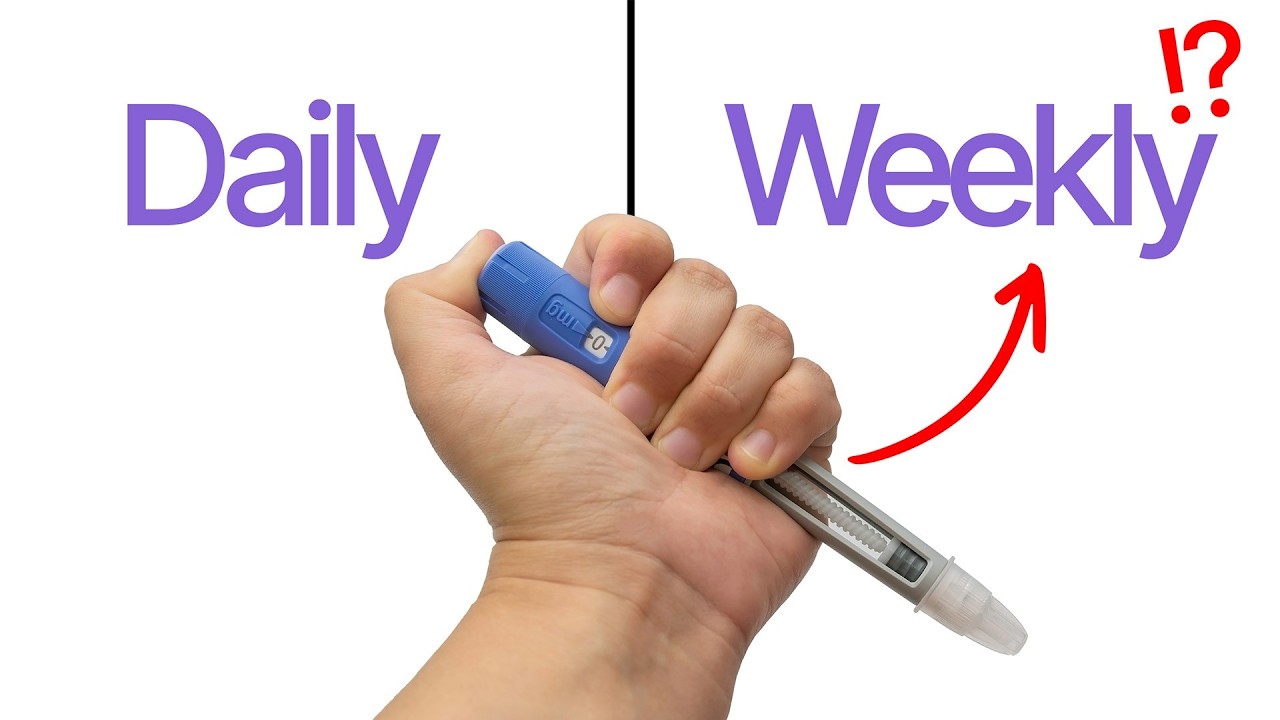
GLP-1 drug differences are often overlooked, even as medications like Ozempic and Saxenda become widely discussed. While these drugs share the same core function, small molecular changes lead to very different dosing schedules. In this Bio Break episode, Nick and Nigel explore why some GLP-1 drugs are taken daily while others last a full week, and what drives that difference at a molecular level.
How GLP-1 Drugs Work in the Body
GLP-1 is a hormone your body naturally produces when food reaches the intestine. It helps regulate blood sugar and appetite by increasing insulin production, decreasing glucagon, and signaling that you are no longer hungry.
Synthetic GLP-1 drugs are designed to mimic this process. However, natural GLP-1 breaks down quickly due to an enzyme called DPP-4. To be effective as treatments, these drugs must last longer in the body. That requirement is what drives the key differences between them.
GLP-1 Drug Differences in Molecular Design
The most important GLP-1 drug differences come down to how each molecule resists breakdown.
Earlier drugs like liraglutide include a fatty acid chain that allows them to bind to proteins in the bloodstream. This slows down how quickly enzymes can access and break them apart. As a result, these drugs remain active longer than natural GLP-1.
Newer drugs like semaglutide build on this idea. They not only bind more effectively, but they also modify the part of the molecule where enzymes typically break it down. This makes the molecule even more resistant, extending its time in the body.
Weekly vs Daily GLP-1 Dosing
One of the most visible GLP-1 drug differences is how often the drug needs to be taken.
Liraglutide-based treatments require daily injections because their half-life is shorter. In contrast, semaglutide can last up to a week. This allows for weekly dosing, which changes how patients interact with the treatment.
This shift is not just about convenience. It reflects how small molecular adjustments can significantly change performance.
Why These Differences Matter
Understanding GLP-1 drug differences is important beyond the biology.
For teams developing drug delivery systems, these properties directly influence design decisions. A daily injection and a weekly injection create very different requirements for usability, adherence, and patient experience.
This episode highlights how chemistry and product design are closely connected. The biology explains what the drug does. The molecular design determines how it fits into real-world use.
Enjoying Bio Break? Sign up to get new episodes sent to your inbox.
Related Resources

When one team designs, lays out, and brings up a board, knowledge sticks. Splitting that work across specialists looks efficient but creates the risk it’s meant to avoid.

AI coding agents like Claude and Codex are helping EE teams turn concepts into tested hardware in weeks, not months, without adding a new vendor or software dependency.

Choosing an EE partner is a program risk decision, not a staffing decision. Early architecture choices carry through to certification, and the wrong partner can cost far more than their hourly rate suggests.

PCB stack-up shapes signal integrity, EMC performance, and manufacturability long before layout begins. Getting layers and reference planes right avoids costly redesigns later.