

Indirect ELISA Assay Explained

The indirect ELISA assay is a powerful and flexible method for detecting antibodies using enzyme linked immunoassay techniques. In this Bio Break episode, Nick and Nigel walk through how indirect ELISA works, why it uses two antibodies instead of one, and when this approach makes the most sense in real diagnostic workflows.
To start, indirect ELISA builds on concepts introduced in direct ELISA detection. You still begin with an antigen immobilized on a surface. However, instead of linking an enzyme directly to the primary antibody, indirect ELISA adds an extra detection step. This additional layer creates more options for what you can measure.
How Indirect ELISA Works
In an indirect ELISA assay, the first antibody binds directly to the antigen. This primary antibody has two important regions. One region recognizes the antigen, while the conserved region identifies it as an antibody. Next, a second antibody is introduced. This secondary antibody is raised against the species of the first antibody, such as anti-rabbit antibodies raised in a mouse.
Because the secondary antibody is enzyme linked, it becomes the signal generator. Once the substrate is added, the enzyme produces a detectable signal. As a result, the presence of the antigen can be measured indirectly through this antibody chain.
Why Use an Indirect ELISA Assay
At first glance, indirect ELISA may seem more complex than linking a marker directly to the antigen. However, this structure offers important advantages. Most importantly, it allows you to detect antibodies rather than antigens.
For example, if you want to determine whether someone has previously been exposed to a virus, indirect ELISA enables that measurement. The assay can detect antibodies produced by the body in response to infection. This flexibility explains why indirect ELISA is commonly used in immunology and diagnostics.
Where Indirect ELISA Fits Among ELISA Methods
Nick and Nigel also emphasize that indirect ELISA is just one configuration among many. While it is not always the most commonly used format, it serves as a foundation for understanding more advanced approaches. In fact, the episode closes with a preview of sandwich ELISA, which builds on many of the same principles and is often considered the most useful version in practice.
If you are learning how ELISA assays work, understanding indirect ELISA provides essential context for antibody detection strategies and assay design decisions.
Enjoying Bio Break? Sign up to get new episodes sent to your inbox.
Related Resources
Medical device cleaning is more complex than it seems. In this Bio Break episode, Nick and Nigel unpack what really goes into cleaning medical devices and why it cannot be treated like a simple wipe-down process.
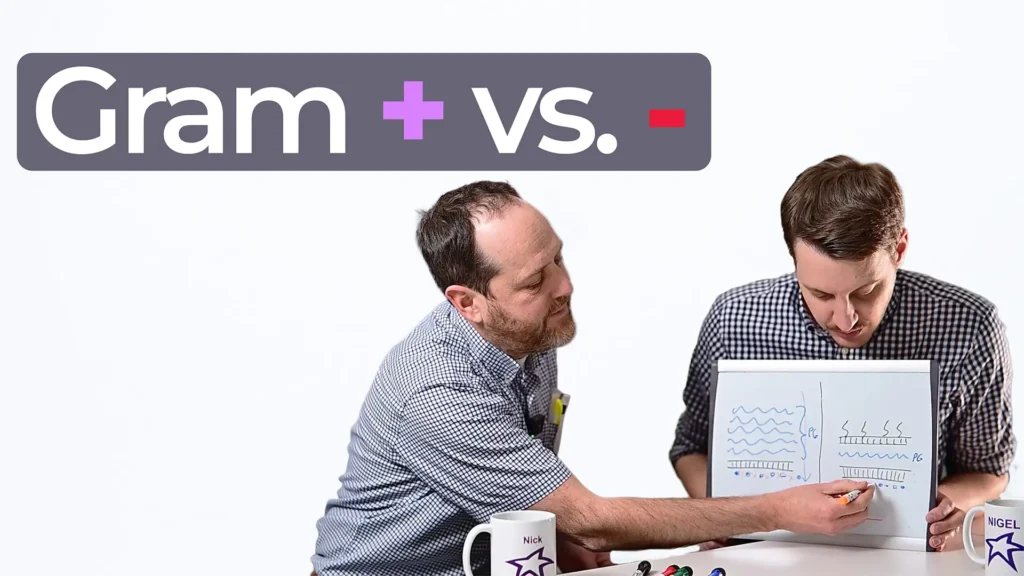
Understanding gram positive vs negative bacteria is essential when studying sterility, microbiology, and antibiotic effectiveness. While many people think the difference is only about staining, the reality is much deeper.

Nick and Nigel explore the science behind hand sanitizer formulations. They discuss how alcohol interacts with bacterial cells, why water improves its effectiveness, and what the additional ingredients in sanitizer actually do.
Antibiotics changed medicine forever, but many people still wonder how penicillin works at a biological level. Nick and Nigel break down the science behind one of the most important antibiotics ever discovered.