Resource Centre

Discover a wealth of knowledge and insights from the experts at StarFish Medical. Our Resource Centre offers product development tips, reviews of new and cutting-edge technologies, and in-depth articles on regulatory updates and compliance in medical device development.

Archive Filters
Actions
  • Sterilizing medical devices using various FDA-approved methods - Image showing three medical-related items—a pulse oximeter, surgical scissors, and a catheter with a Luer lock—on a light background. A bold label at the top reads ‘How to sterilize?’ with an arrow pointing to the pulse oximeter, indicating a question about sterilization methods for these devices.

    Ariana and Mark walk through FDA-approved options and explain how to select the right one for your product. From metals to plastics and electronics, not all devices can handle the same process.

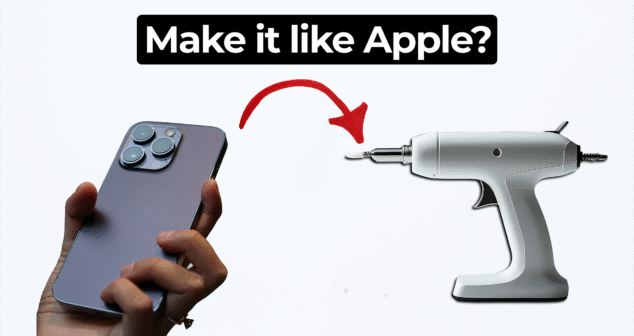
  • A hand holds an iPhone on the left side of the image, with a red curved arrow pointing to a sleek, futuristic medical device shaped like a handheld drill on the right. Above the arrow, a black box with white bold text reads, “Make it like Apple?”.

    Many clients now request their devices to look and feel like Apple products. But achieving that level of simplicity and elegance is not as easy as it seems.

  • MedTech CDMO partnership- Illuminating abstract bridge made of light bulbs symbolizing innovative solutions that connect problems to goals and The glowing futuristic structure represents the power of technology creativity

    How can you and your company culture thrive in collaboration with a MedTech CDMO? Learn the eight client traits CDMO teams say are key to building strong, successful partnerships.

  • FDA use of AI in medical device review - A computer chip labeled "AI" on the left side is connected by a black arrow pointing to the right, where wooden blocks stacked vertically spell out "FDA." Above the image is a bold caption that says "They're doing it!" in white text on a black background. The image suggests the FDA is adopting AI technology.

    Ariana Wilson and Mark Drlik dive into how the FDA is adopting artificial intelligence to modernize its regulatory processes. With a new chief AI officer in place and rumors of collaboration with OpenAI, the agency is taking major steps to automate review workflows and improve efficiency.

  • A laptop on a wooden desk displays a digital document icon on its screen. Beside it, bold text reads "Design History Files Explained," highlighting the topic of regulatory documentation in medical device development.

    Nick and Joris break down what a DHF is, why it's required, and how it plays a vital role throughout the development lifecycle.

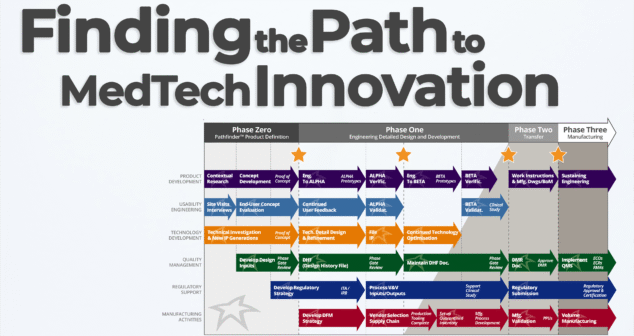
  • A visual project roadmap titled "Finding the Path to MedTech Innovation" shows five development phases: Phase Zero (Pathfinder Product Definition), Phase One (Engineering Detailed Design), Phase Two (Transfer), and Phase Three (Manufacturing). Each phase includes activities such as contextual research, usability engineering, IP generation, design input development, regulatory strategy, prototyping, verification, manufacturing process development, and volume manufacturing. Arrows represent workflows across multiple functions like product development, quality, and regulatory support, with milestone gates marked by stars.

    Nick and Joris explore one of the most dynamic early-phase services at StarFish Medical: the Pathfinder Program. If you're a medtech innovator with a promising concept or prototype, Pathfinder helps you identify the right path forward—before you invest millions in development.

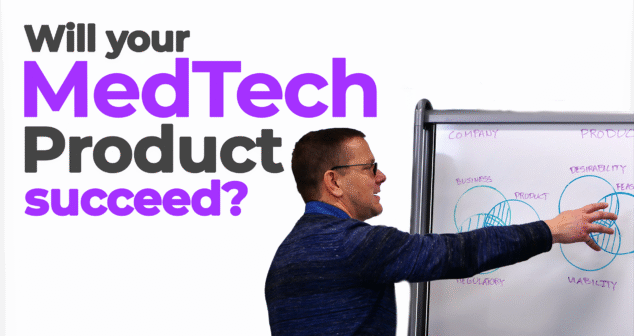
  • Thumbnail with the text 'Will your MedTech Product succeed?' in bold black and purple font. On the right, Mark Drlik wearing glasses gestures toward a whiteboard with triple Venn diagrams labeled with terms like 'Desirability,' 'Feasibility,' 'Viability,' and 'Regulatory.'

    Ariana Wilson and Mark Drlik break down a powerful visual framework for understanding what makes a medtech product, and the company behind it, truly successful. Using a triple Venn diagram, Mark explains how strategic alignment across feasibility, viability, and desirability can drive better product outcomes and business success in the medical device industry.

  • A close-up image of a hand drawing on a whiteboard with a marker, illustrating a brainstorming or planning session. Bold text on the left reads 'Cost to develop Medical Device' with the word 'develop' highlighted in purple. The image conveys the concept of medical device development costs and design planning.

    What are the real costs of developing a medical device? In this episode of Bio Break, Nick and Joris dive into one of the most frequently asked questions they hear from clients: How much does it cost to develop a medical device?

  • A futuristic smartwatch displaying biometric data on its screen, set against a glowing blue background with abstract graphs. Bold text reads "Where's my Cortisol-Sensing Watch?" in a mix of grey, purple, and black fonts.

    Nick and Joris tackle a question many tech and health enthusiasts have wondered for years: Where is my cortisol-sensing smartwatch? Nick shares a nostalgic story of reading about futuristic wearable technology in Popular Mechanics as a child — devices that would one day monitor biomarkers like cortisol to track stress and overall health. Now, decades later, he and Joris break down why such a wearable device still hasn't become a reality.